
Frequently Asked Questions
Below you will find information that might help you understand how to find things or learn about information you might need to know about your city or town.
Wildfire Risk Assessments
4-
Wildfire Risk Assessments
Yes, any property within the Aspen Fire Protection District can be evaluated for its wildfire risk. For more information, please call 970-925-5532.
-
Wildfire Risk Assessments
The assessment looks at all aspects of the building including construction, vegetation, and surrounding topography. The assessment criteria is based on guidelines recommended by the Colorado State Forest Service and the FireWise program. For more information, please call 970-925-5532.
-
Wildfire Risk Assessments
The assessment is simply a recommendation to help lower wildfire risk to a property, neighborhood, and the Aspen community. Mitigation increases a property's chance of survival and helps emergency responders in the event of a wildfire. For more information, please call 970-925-5532.
-
Wildfire Risk Assessments
There are a range of service providers that can do the recommended mitigation work or a property owner may conduct the work themselves. The City of Aspen will assist with mitigation efforts by organizing chipping days and hauling brush away.
It is not always possible to control a wildfire. Planning and preparation can make all the difference in property protection and community safety. We encourage community members to do their part. For more information, please call 970-925-5532.
Human Resources
4-
Human Resources
The City of Aspen has an online employment application. To view our current open positions go to the Job Opportunities page.
-
Human Resources
No, applications that reference “see resume” will be considered incomplete.
-
Human Resources
Yes. If you are interested in a job that is not currently being recruited for you can set a Job Alert. To do this select your specific job criteria below and click search. From here you can save the search and create a Job Alert that will notify you by email of new opportunities that match this search criteria.
-
Human Resources
Each positions timeline varies but will follow this general format. Applications that meet minimum qualifications will be forwarded to Hiring Managers. After the closing date, Hiring Managers will review and reach out for phone screens. Once phone screens are complete, an in-person interview will be conducted and an offer will be made shortly after.
Electric
10-
Electric
No. It is required that you contact the Colorado 811t for a line locate. This is for your safety and for the protection of electric transmission lines. Call 811 to schedule a locate.
-
Electric
We are on call 24 hours a day. If you need to contact us after hours, please call City Dispatch at 970-920-5310.
-
Electric
Call 811 to schedule your line locate. They will need address of location, on-site contact name and phone number.
-
Electric
Call the Utility Billing Office at 970-920-5030 or 970-920-5031.
-
Electric
For more information on Photovoltaic Installation, see the Application for Photovoltaic (PV) Installation (PDF). For more information, please call the Electric Department at 970-920-5148.
-
Electric
Call the Electric Department at 970-920-5148 and ask for Ron Christian.
-
Electric
Call the Utility Billing Office at 970-920-5030 or 970-920-5031.
-
Electric
Call the Utility Billing Office at 970-920-5030 or 970-920-5031.
-
Electric
For more information about Main Street banners, see Engineering’s policy, procedures and application.
-
Electric
Call the Electric Department at 970-920-5148, or, submit an online report.
Water
10-
Water
No, you contact 811. It is required that you contact the Utilities Notification Center of Colorado at 811 before you dig. They will need the address of location, on-site contact name and phone number and detail of work requested. For more detailed information, please click here: https://www.cityofaspen.com/1272/811---Before-You-Dig.
-
Water
We are on call 24 hours a day. If you need to contact us before or after hours, please call City dispatch at 970-920-5310.
-
Water
In an emergency, please contact City dispatch at 970-920-5310. For a non-emergency, please contact our office during business hours at 970-920-5110 with details of the location of the leak.
-
Water
It is illegal to connect to a fire hydrant within the City of Aspen water system. Please refer to our Filler Hydrant Program page for details. For more information, please contact the Water Department at 970-920-5110.
-
Water
Please call Engineering at 970-920-5080 or visit our webpage on Water Utility Connection.
-
Water
Please email Keith Wester, our Utilities Program Manager, or call 970-920-5110.
-
Water
Your tap water is safe without one. If you have an internal problem with your plumbing, you may want to consider a filter or treatment system. For more information, please contact the Water Department at 970-920-5110.
-
Water
The Aspen Water Department frequently tests for these parasites in the water under provisions of the Long Term Surface Water Treatment Rule (LTSWTR2). Giardia is common in our source water but as to date no Cryptosporidium has been detected. Effective treatment and filtration processes remove and/or inactivate all parasites prior to our distribution system. Under the Federal governments Surface Water Treatment Rule (SWTR), we are required to maintain a detectable disinfectant level in the distribution system at all times. For more information, please contact the Water Department at 970-920-5110.
-
Water
Add Vinegar During the Final Rinse
Commercial spot-free rinse for the dishwasher does not always work to prevent a film on dishware. If glasses and even plastic items are coming out of the dishwasher covered in a dusty white film, try adding one-half to a full cup of white vinegar just as the final rinse begins. For some this works to prevent a white film on dishes, and the vinegar works to keep hard water deposits from building up inside the dishwasher and the working components and drains.
Use Less Detergent
Hard water can be remedied with a water softener, but even those with a water softener sometimes have problems with a white film on dishes. When a water softener is used, it is not necessary to completely fill the dishwasher detergent cups. The amount of detergent used can be cut in half. It could be an overuse of detergent causing the thin white film on glassware and other dishes. Cut back the amount of detergent used. Not only will this save money, but it will also help prevent the formation of white film on dishes.
More Information
For more information, please contact the Water Department at 970-920-5110.
-
Water
Pass inspection.
Complete all permit documentation and submit.
Utility Billing
7-
Utility Billing
This is the Account Set-Up Fee and it is automatically charged to an account when the account changes names. For more information, please call Utility Billing at 970-920-5030.
-
Utility Billing
Complete the Automatic Payment Form on-line and submit. The form will be received by Utility Billing staff and processed. Depending upon when the form was received, the auto pay feature will be effective for the next monthly bill.
-
Utility Billing
Please visit our Cross Connection Control AKA Backflow Prevention Program page for more information.
-
Utility Billing
Complete the on-line Utility Billing form.
-
Utility Billing
A meter inspection needs to be completed. Contact the Utilities Program Manager, Keith Wester to schedule one. His contact information: Email: keith.wester@cityofaspen.com / Phone: 970.429.1995.
-
Utility Billing
An inspection is done at no cost to the customer to insure the installation and equipment meets city ordinances. A meter technician inspects the meter, located inside your property, as well as your remote, located on the exterior of your property. If you would like a copy of the ordinances forwarded to you, please call 970-920-5030/5031.
-
Utility Billing
Tap fee payments are made at the Finance window, located on the first floor in City Hall, 130 South Galena Street, Aspen Colorado. All questions concerning tap fees should be directed to 970-429-1974.
Kids First
5-
Kids First
You can contact us, or go online to find licensed childcare. On our home page click on the link to "find childcare ". If you are looking for care in a different region in Colorado go to Colorado Shines for information anywhere in Colorado. If you are looking for a different childcare arrangement such as an au pair, or babysitting while you are visiting Aspen, your best bet is the yellow pages or an online search for other services that are not licensed in Colorado.
-
Kids First
Early Childhood Education is expensive to provide for many reasons; childcare is regulated by the State of Colorado and must follow rules regarding staffing ratios and group size, and teacher qualifications for example that have a direct effect on the budget. Many programs work to improve the quality of their services by lower ratios and group size, or hiring more highly qualified teacher which also costs more money. In our resort area it is very difficult to be competitive in the job market and pay a living wage to staff. Programs also have rent or building expenses.
Financial Aid
Kids First has Financial Aid available to working families who live or work in Aspen's Urban Growth Boundary, who use licensed childcare in Pitkin County and who meet the financial qualifications. You may find that application on this site or ask your childcare provider for one. We can also refer some families to other sources of childcare assistance with different qualifications; if you need some direction email or call us at 970-920-5363.
-
Kids First
Kids First and Aspen Family Connections have resources and materials that may help you talk to your employer about your childcare needs. Most employers do not realize how difficult it is for families with young children to maintain stability in both their home and work lives. You may also contact us by email or at 970-920-5363 and ask one of our staff about your particular concern. Most of us have been there and understand how challenging this time is for you.
-
Kids First
Your first call should be to the director of the early childhood program you are concerned about. They are the person who can do something about the issue and most of them truly want to know your concerns. If you are not satisfied you may contact us about a concern you have; you may also want to call Colorado Childcare Licensing if it is a safety, abuse or neglect issue. Kids First may be reached at 970-920-5363 or email and to reach Colorado Division of Childcare - licensing call 1-800-799-5876.
-
Kids First
Kids First has information and start up funding if you are interested in running your own business as a family childcare home provider. We welcome your questions, explain the benefits, and guide you through the steps necessary to become licensed. You may also call our local licensing specialist, Mark Lapka at 970-945-9191 ext. 3068 or email for more information and for information about the required pre-licensing training.
Car To Go: Corporate Memberships
4-
Car To Go: Corporate Memberships
Car To Go provides its members with access to a fleet of hybrid vehicles parked around Aspen. Cars are owned, maintained and insured by the City of Aspen. Both individual and corporate memberships are offered. For more information please call 970-920-5066.
-
Car To Go: Corporate Memberships
A Car To Go corporate membership is a low cost, time-saving alternative to owning and operating a company fleet and/or managing a mileage reimbursement program. With a corporate membership, your business can access a fleet of small and mid-size sedans, SUVs and even a pickup truck. Use the cars for meetings or site visits. For more information please call 970-920-5066.
-
Car To Go: Corporate Memberships
Once you’ve become a corporate member, employees simply complete a short application and orientation. Vehicle reservations take just seconds and can be made via internet or phone. For more information please call 970-920-5066.
-
Car To Go: Corporate Memberships
To get going, email or call the Car To Go office at 970-920-5066.
High Occupancy Vehicle (HOV) Lanes
4-
High Occupancy Vehicle (HOV) Lanes
HOV lanes on SH82 are indicated by a large, white diamond painted on the pavement in the right lane, as well as standard black and white regulatory signs along the roadways. HOV lanes are open from Basalt to Buttermilk.
-
High Occupancy Vehicle (HOV) Lanes
No, High Occupancy Vehicle lanes will be strictly enforced Monday through Friday, from 6 to 9 a.m. up valley (to Aspen), and from 3 to 6 p.m. down valley (to Basalt).
-
High Occupancy Vehicle (HOV) Lanes
Primarily buses and carpools with at least two people in the car, counting the driver. Yes, kids count too! Motorcycles and alternative fuel vehicles can also use HOV lanes at all times, even if traveling alone.
-
High Occupancy Vehicle (HOV) Lanes
In 1987, the Environmental Impact Statement (EIS) process began for the section of highway between Basalt and Buttermilk. An EIS is required for most highway projects in order to determine the best transportation solutions and what is best for the environment. Because of the decisions in the study, peak-hour HOV lanes became a part of the SH82 widening plan. HOV lanes encourage carpooling and riding the bus, which helps improve our air quality.
Aspen's Bus Lanes
4-
Aspen's Bus Lanes
The bus lanes are for RFTA buses and emergency vehicles only, 24 hours daily, 7 days per week. Failure to comply with the designated bus lanes may result in a three-point ticket and a $100 fine. For more information, review the State Highway 82 Bus Lanes Operation Study (PDF).
-
Aspen's Bus Lanes
Need to turn right? Use the striping on the roadway as a guide. Do not cross double white lines.
-
Aspen's Bus Lanes
If an emergency vehicle is approaching, stay in your lane. The emergency vehicle will pass using the bus lane.
-
Aspen's Bus Lanes
The carpool and single occupant vehicle lanes merge from left to right into one lane prior to the Harmony Road intersection. Follow roadway striping prior to the Harmony Road signal. Please be patient and polite.
Parking in Residential Area
5-
Parking in Residential Area
For qualifying addresses within our Residential Zones, you may obtain up to 3 electronic residential permits and one guest permit. Both residential and guest permits are managed by the permit holder in the Permit Management Portal located in our 'Residential Parking Options' tab. To acquire a residential permit, the vehicle must be registered in Pitkin County, when there aren't registration requirements for plates using the guest permit.*Some address have different restrictions. Please call or email the parking department for information on certain address' restrictions.
-
Parking in Residential Area
You may obtain a Residential Parking Permit by following our guidelines, and park in the nearest Residential Parking Zone to your address in the Downtown Aspen area. For more information please call 970-920-5267.
-
Parking in Residential Area
No, all vehicles regardless of permits are subject to a 72 hour limit in residential zones-must move vehicle to a new spot in the residential zones every 3 days. All vehicles must comply with "No Parking 3 a.m. to 7 a.m.," and Permits do not exclude you from paying for Parking in the Downtown/Core zones or any other normal (posted) restrictions. For more information please call 970-920-5267.
-
Parking in Residential Area
Businesses that are located in our enforcement zone/s holding a valid City of Aspen Business License may buy one permit for $125.00 yearly (No Prorate). Each Business Permit can only have 1 plate on it and is intended for access to Loading Zones. For more information please reference Muni-Code or call 970-429-1761.
-
Parking in Residential Area
If you are visiting, ask your host to add your license plate to their Guest Permit (valid only while actually visiting at a permit holder's address and parking in the immediate vicinity) or paid parking is available using one of our payment options (Pay By Phone App or Meters) allow all day parking in any of the residential zones.
Carpools of three or more adults, are eligible for free carpool permits that allow parking in any residential or carpool zone all-day. These passes are only available at the Brush Creek Park & Ride. For more information click here or call 970-429-1761.
Municipal Court
1-
Municipal Court
If you have a clean Driving History for the past FIVE years you would be eligible to take a Defensive Driving Class or complete an online Traffic School.
- You must contact the Municipal Court Clerk at 970-429-2681 to see if you are eligible for this option
- A $100 fee to the City of Aspen must be paid
- Completion of the class must be provided within 90 days of the date on the ticket
View options for Traffic School.
Aspen 360°
2-
Aspen 360°
Aspen 360° is back for 2024! Applications will be open from June 1, 2024 to July 1, 2024.
What is Aspen 360°? Aspen 360° is designed to provide participants with insight into the roles, responsibilities, limits, and services offered by our local government. These sessions consist of a series of informative meetings and field trips. By engaging in this program, residents can become more informed and engaged citizens, equipped to contribute positively to our community.
The Aspen 360° class will meet for a total of seven sessions over a three-month period from August to October. Class topics will include a city overview, city services, the environment, the built environment and infrastructure, tax dollar funds and special services, parks and open spaces and community involvement.
For more questions, please reach out to our Communications team at communications@aspen.gov.
-
Aspen 360°
When the 2024 application is available, a link will be posted on this site. If you have questions, please contact the Communications Office communications@aspen.gov.
Parks & Open Space
3-
Parks & Open Space
Aspen's Quality Office's Wildfire Mitigation Division can give more information about wildfire mitigation.
-
Parks & Open Space
-
Parks & Open Space
Download the COA Parks, Trails and Open Space map here.
Street Department
10-
Street Department
The City’s Streets team conducts snow removal activity when there are three inches or more of snow in one storm event.
-
Street Department
The City of Aspen has tested various deicing chemicals in the search for an environmentally safe, effective, and affordable alternative to sanding the roads. We are currently applying no type of deicer chemicals to any street maintained by the City of Aspen.
The Street Department uses an average of 389 tons of 3/8’’ washed chip rock per winter season to improve traction on the City streets. This material is hard and dustless, thereby helping to reduce dust/PM-10 in the air. The City applies sanding material in the commercial core, on Main Street, and on bus/emergency vehicle routes and roads that have steep grades. Gravel is also applied at major intersections where stopping and turning are difficult.
-
Street Department
Snowplows are the first to mobilize in a storm. Plowing activity occurs in Downtown Aspen and the residential areas when there are three inches or more of snow. The goal of plowing is to move the snow out of the roadway. Snow removal is the process where dump trucks are used to collect all of the snow that was plowed to the sides of the roads. The trucks take the snow to a snow storage site next to the Aspen Animal Shelter. Only snow from the downtown core is taken to the snow storage site. Snow in residential areas is left to melt off, enter the filtration systems of the City’s stormwater infrastructure, and flow into the Roaring Fork River.
-
Street Department
The Street Department primarily completes snowplow operations at night. Snow removal operations only occur at night, generally from 11 p.m.- 9 a.m.
-
Street Department
We prioritize the streets according to traffic volumes and public safety requirements, focusing first on bus routes and primary access routes for emergency vehicles. The priority order for plowing activities is: Main Street, Downtown Core, alleys, bus routes, artillery roads, residential streets, residential alleys.
-
Street Department
Driveway maintenance (snow removal, cleaning, etc.) remains the responsibility of the property owner. The response time to relocate the plow blade angle makes it infeasible to try and blade snow away from driveways.
-
Street Department
To request a new street sign, please contact Engineering at 970.920.5080 or EngineeringHelp@cityofaspen.com.
-
Street Department
A pothole is a chunk of asphalt that is missing from the roadway. A sinkhole is where the asphalt is intact but has sunk due to instability of the ground beneath it.
A utility cut occurs when someone has cut into the street to access the utilities below. Most of these are done by private contractors. If it has not been permanently patched in a long period of time, or if the patch has sunk severely, please contact the Engineering Department at 970.920.5080 or EngineeringHelp@CityOfAspen.Com.
For repair of a pothole or a sinkhole, please contact the Street Department at 970.920.5130, or submit an online request.
-
Street Department
For information about towing locations, contact the Aspen Parking Department at 970.920.5267 or Parking@CityOfAspen.Com.
-
Street Department
The public right of way, including those areas between the sidewalk on both sides of most roadways, is owned by the City. Private property owners are allowed to place objects such as mailboxes, sprinkler systems, landscaping and driveways in the public right of way. Property owners are responsible for maintenance, replacement or any damages to the objects on City property caused by, but not limited to, snow removal, street sweeping or other City activities. For more information, please contact the Street Department at 970-920-5130.
Business Navigator - Transportation Impact Analysis
13-
Business Navigator - Transportation Impact Analysis
A Transportation Impact Analysis, or TIA, assesses the transportation impacts of proposed projects on surrounding and supporting transportation infrastructure and services. A TIA determines if the adverse effects constitute significant impacts, and, if so, how the significant impacts can be mitigated.
-
Business Navigator - Transportation Impact Analysis
City of Aspen Ordinance #8 of 2014 adopted the TIA process with the goal of providing a technical approach to transportation impact analysis for development projects within the City that is simple, consistent, and fair while ensuring that the City continues to meet its longstanding goal of limiting trips over the Castle Creek Bridge at 1993 levels.
-
Business Navigator - Transportation Impact Analysis
See Table 1 on page 7 of the TIA Guidelines document for a simple means of determining your project category. If your project is exempt, nothing further is required. Should your project be considered minor, you will need to complete a level one TIA. Major projects must complete a level two TIA. Projects that fall into more than one category will be subject to the highest requirement.
-
Business Navigator - Transportation Impact Analysis
A Level One TIA requires that the project determine its trips generated using a simple excel-based tool. The project will also be required to use the same tool to determine which measures it will use to mitigate those trips. This information must be submitted as part of the land use application, along with a narrative report. Detailed information on this process can be found on page 12 of the TIA guidelines document.
-
Business Navigator - Transportation Impact Analysis
A Level Two TIA will require, at a minimum, a site plan review, trip generation capacity analysis and the use of the TDM/MMLOS tool to determine trip mitigation. The contents of a Level Two TIA will vary based on the nature of the proposed project. Please see page 20 of the TIA Guidelines document for more information.
-
Business Navigator - Transportation Impact Analysis
The accompanying narrative explains why certain mitigation methods were chosen, and ensures that a project is utilizing the most appropriate mitigation measures. The narrative should also outline the proposed monitoring system, which is not addressed in the excel-based tool. Make sure the items addressed in your narrative match your selections in the tool.
-
Business Navigator - Transportation Impact Analysis
Transportation Demand Management (TDM) is the application of strategies and policies to reduce travel demand (specifically that of single-occupancy vehicles).
-
Business Navigator - Transportation Impact Analysis
Multi-Modal Level of Service (MMLOS) evaluates the safety and quality of access and flow for transit, pedestrians and bicyclists.
-
Business Navigator - Transportation Impact Analysis
The City of Aspen’s preference is that trip mitigation be achieved via the mitigation measures identified in the TDM and MMLOS toolkits. However, there is also the opportunity for capital and operational/maintenance contributions should they make sense for a specific project, or if a project exhausts all other mitigation options.
These types of contributions will be assigned credits as per the most recent information in the TIA Guidelines document and must be approved by City of Aspen Transportation and Engineering staff. More information can be found on page 14 of the TIA Guidelines document.
-
Business Navigator - Transportation Impact Analysis
Read through the TDM and MMLOS glossaries located in the TIA Guidelines document. Short definitions of various measures are also found in the MMLOS and TDM tool by hovering over the measure. When considering measures, think about who will occupy your project and what measures make sense for them.
Also consider the surrounding neighborhood and proximity of various services. Look at any deficiencies in the area that you may be able to improve, both for your residents/customers and others. Finally, contact the appropriate staff if you need to discuss a measure in detail.
-
Business Navigator - Transportation Impact Analysis
If your project lacks specific tenants, you should take care to select measures that make sense for the general type of use proposed. For example, if you know it will be a retail space but you have not yet selected a specific tenant, select measures that will serve retail type uses, such as subsidized bus passes or bike share memberships.
-
Business Navigator - Transportation Impact Analysis
The TIA process is meant to provide improvements to existing conditions. Therefore, infrastructure and/or programs currently in place will not receive credit. Improvements to existing infrastructure and/or programs are generally eligible for credit. Examples include an increased bus pass subsidy or an improvement to an existing bus stop.
-
Business Navigator - Transportation Impact Analysis
Measures are eligible for credit only once. For example, an employee vanpool may receive credit as a TDM measure for “employee vanpool” but may not receive concurrent credit as an employee vanpool and an employee shuttle. Be sure to read the definitions of specific measures to assist in your selection.
Business Navigator - Business Licenses
3-
Business Navigator - Business Licenses
Any entity doing business within the City, directly or indirectly, must obtain a combined sales tax and business license. You are considered engaged in business if you:
- Send 1 or more employees, agents, or sales persons into the City to solicit business or to install, assemble, repair, service or assist in the use of products or for demonstration or other reasons (i.e., locksmith, electrician, plumber)
- Maintain 1 or more employees, agents, or sales persons on duty at a location within the City (i.e., contractors with employees working and on job sites located within City limits)
- Own, lease, rent or otherwise exercise control over real or personal property within the City (i.e., renting your home for any length of time)
- Make more than 1 delivery into the City within a 12 month period (i.e., florist)
- Directly, indirectly or by a subsidiary, maintain a building, store, office, salesroom, warehouse or other place of business within the City. (i.e., retail or service shop located within City limits)
-
Business Navigator - Business Licenses
Yes, you must renew your business license each year and pay the annual fee based on the estimated monthly average full time employees of your business.
-
Business Navigator - Business Licenses
Most likely. If you are providing any type of service, bringing goods into the City, and/or deriving profit within City limits, you are engaged in business within Aspen and therefore, a business license is required.
Business Navigator - Sales & Lodging Tax
9-
Business Navigator - Sales & Lodging Tax
- Monthly returns are due on or before the 20th day following the end of the reporting period.
- If monthly tax is less than $10, taxpayer may file annually or monthly.
- If monthly tax is $10 or more, taxpayer must file monthly and continue to file monthly the rest of the calendar year.
-
Business Navigator - Sales & Lodging Tax
- Non-taxable service sales: Invoice should clearly denote the type of service performed.
- Sales to other licensed dealers for purposes of taxable resale: Certificate from buyer’s home state documenting buyer is a wholesaler.
- Sales shipped out of city: Shipping documents that can be traced to invoice. Shipping receipts should include individual/company where item was shipped, address and invoice number. Invoice should include purchaser’s name and shipping address.
- Sales to governmental, religious and/or charitable organizations: Valid exemption certificate from buyer’s home state or a letter from IRS indicating exempt status, including name of organization and employer identification number (EIN). Note: In order for purchases to be tax exempt, the organization must be conducting regular religious, charitable, scientific, literary, or educational business. For example, a church that has tax exempt status would have to pay applicable sales and lodging taxes to a hotel if church members are on a ski vacation, even if the lodging services were paid with a church check.
-
Business Navigator - Sales & Lodging Tax
- Service oriented businesses generally do not need to collect sales tax.
- Persons engaged in the business of rendering service are consumers, not retailers, of the tangible personal property which they use incidentally in rendering the service.
- If, in addition to rendering service they regularly sell tangible personal property to consumers, they are retailers with respect to such sales and they must obtain a license, file returns, and remit tax on such sales.
-
Business Navigator - Sales & Lodging Tax
- Excess tax is accounted for on line 6 of the sales tax return.
- No retailer may retain any tax collected in excess of the tax computed, and should report the excess collections on the return for the period in which it was collected and include it in the calculation of tax due.
-
Business Navigator - Sales & Lodging Tax
- If a dispute arises between a retailer and a purchaser who claims a sale is exempt from tax, the retailer must collect and the purchaser should pay the tax.
- The purchaser can submit a claim for refund to the City within 60 days from the date of purchase.
- Any refund will be issued directly to the purchaser.
-
Business Navigator - Sales & Lodging Tax
- Lodging tax, otherwise known as a visitor benefit tax, was enacted by the City Council for the promotion of tourism and transportation services within the Roaring Fork Valley.
- A special fund, the City Tourism Promotion Fund, was created and 25% of the monies goes toward transportation while the other 75% goes toward tourism promotion. Funds dedicated to transportation services pay for regional transit services provided by the Roaring Fork Transportation Authority (RFTA) and for local public transportation within the City.
- Funds dedicated to tourism promotion are appropriated by City Council to a professional marketing entity for advertisement, promotion, etc., which is currently the Aspen Chamber Resort Association.
- The tax is imposed on the leasing or renting of rooms or other accommodations in commercial lodging establishments.
- The person who is renting the accommodations is required to pay the tax and the person from whom the accommodations are rented is required to collect and remit the tax to the City.
- The lodging tax is 2.0%.
-
Business Navigator - Sales & Lodging Tax
- Yes, if you rent your home on a short-term basis, you are required to collect and remit sales and lodging taxes to the City.
- A short term rental is defined as any period that is less than 30 days.
- The total combined sales and lodging tax rate for a traditional lodge in Aspen is 11.3%. A short-term rental property lodge will have to collect and remit:
- an additional 5% excise tax on nightly stays if the property is either an "owner occupied" or "lodge exempt" property; or
- an additional 10% excise tax on nightly stays if the property is a "classic" (investment property or second homeowner property).
-
Business Navigator - Sales & Lodging Tax
- Yes, you must collect sales and lodging taxes on such fees.
- It is considered part of the room charge and is not exempt from taxes.
-
Business Navigator - Sales & Lodging Tax
- Possibly. Since 2009, the Finance Department has a sales and use tax audit program.
- The audit period includes all reporting periods with due dates which fall within the 36 month period preceding the date of the notice of audit.
Business Navigator - Moving / Changing / Enhancing Your Business
2-
Business Navigator - Moving / Changing / Enhancing Your Business
If one or more of the following occurs:
- Business moves
- Mailing address changes
- Business or trade name changes
- Business is sold or purchased
- Corporation merges with another corporation
- No longer in business
- Business type changes
-
Business Navigator - Moving / Changing / Enhancing Your Business
- You will need to update your business license.
- Your new location will have to receive zoning approval.
- If you are changing the location or type of your business, it may be subject to different standards, restrictions and fees, depending on the zone in which it is located and the type of the new business.
- Applicants are encouraged to check with the planner of the day at 970-429-2764 with zoning questions, but you can determine which zone your business property will operate in by referring to the City of Aspen Zoning Map.
Outdoor Merchandising
2-
Outdoor Merchandising
If your business would like to place, advertise, and sell products in the public right of way (e.g. sidewalks, pedestrian mall, walkways, etc.) you will need to first obtain an Outdoor Merchandising License from the Community Development department. For more information, please contact the Community Development Department.
-
Outdoor Merchandising
You can apply for a license, find additional information, and research requirements on the Outdoor Merchandising License Application (PDF). For more information, please contact the Community Development Department.
Business Navigator - Hosting a Special Event
1-
Business Navigator - Hosting a Special Event
- Renting City facilities are done on a first come, first serve, basis and are subject to certain fees for each facility.
- There are also certain dates and times where particular sites are unavailable for exclusive rental.
- You can get started with your reservation on the City's own Parks Reservation Requests portal.
Parking
4-
Parking
Parking tickets written by the Aspen Parking Department may be disputed within 10 days of issue date online or sign up for a court date with the City of Aspen Municipal Court (Exceptions Apply-See Pay or Dispute Parking Page for more information).
-
Parking
Contact the Aspen Parking Department 970-429-1761 Monday through Friday, 8:30 a.m. to 5:00 p.m. If your vehicle was towed after hours, please contact the Police Department or Dispatch.
You must first go to or call the Aspen Parking Department located at 427 Rio Grande to pay your fines and get a release for your vehicle. The Parking Department will tell you where you can retrieve your car. The Office is open Monday through Friday, 8:30 a.m. to 5:00 p.m.
Payments
Payment for tows must be cash or credit cards only, online at aspen.gov/parking or Parking Department Office. If you have outstanding parking tickets all parking tickets will need to be paid along with the tow fee before your vehicle is released. There are no payment plans or any exceptions.
-
Parking
Title 24: Traffic and Motor Vehicles contains the City of Aspen’s Parking Ordinances.
-
Parking
Revenue collected contributes to providing a number of transportation alternatives including eight free transit routes, carpool permit provision and more. Visit our Transportation Department for more information.
Parking: Paid Parking/Permits
11-
Parking: Paid Parking/Permits
Even if you have a Residential Parking Permit you can not leave your cars parked more than 72 hours on the City street. This could possibly result in your car being towed. For more information please call 970-920-5267.
-
Parking: Paid Parking/Permits
The easiest way is to down load the "PayByPhone" app using your device's App Store. For more information please call 970-429-1761.
-
Parking: Paid Parking/Permits
Pay stations are located mid-block and accept Visa, MasterCard, American Express and Discover as well as coins. Follow the directions on the pay stations and simply enter your license plate number into the meter. (No need to display ticket on your dashboard.)
-
Parking: Paid Parking/Permits
You may park for 2 hours for free in the residential zone but if you leave and come back to the zone you will need to pay $9/day to park (This applies even if you were not in the zone for 2 hours). For more information please call 970-920-5267.
-
Parking: Paid Parking/Permits
Parking is limited and expensive. We encourage you to use alternative transportation whenever possible. If you need to have your vehicle the parking garage is the least expensive choice when you buy the 10 visit pass for $70. Parking in the residential area is $9/day. More information is available on our tab 'Parking Options.'
-
Parking: Paid Parking/Permits
IMPORTANT UPDATE: PARKING FOR ELECTRIC VEHICLES IN RESIDENTIAL AREAS
Beginning February 16, 2026, all electric vehicles will be required to pay for parking in all residential areas of Aspen.
This change supports the continued maintenance and accessibility of our residential neighborhoods. We appreciate your understanding and cooperation as these updates take effect. If you have any questions or need further information, please contact the Parking Department.
Neighborhood Electric Vehicles will be required to pay for parking in all residential areas and downtown core of Aspen. For more information, please contact us at 970-429-1761 or email Parking@aspen.gov.
-
Parking: Paid Parking/Permits
Please call the Parking Department for information at 970-429-1764 or contact Jared Shimp at: Jared.shimp@aspen.gov
-
Parking: Paid Parking/Permits
If you have a handicapped permit from another area we still recognize the permit and you may park in any legal parking space (handicapped or non-handicapped spot). No payment necessary. For more information please call 970-920-5267.
-
Parking: Paid Parking/Permits
Low season: April – May & October – November
10:00 a.m. to 10:59 a.m. – $3.00 per hour
11:00 a.m. to 2:59 p.m. – $5.00 per hour
3:00 p.m. to 6:00 p.m. – $3.00 per hour
High season: June – September & December – March
10:00 a.m. to 10:59 a.m. – $5.00 per hour
11:00 a.m. to 2:59 p.m. – $7.00 per hour
3:00 p.m. to 6:00 p.m. – $5.00 per hour
For more information please call 970-920-5267.
-
Parking: Paid Parking/Permits
Log into your Permit Portal after navigating to the tab 'Residential Parking Options.' You will click on 'Manage Parking Permits' before clicking on 'renew' for the Permit you wish to do so for. For more information please call 970-429-1761 or email Parking@aspen.gov
-
Parking: Paid Parking/Permits
Carpool permits are obtain daily at the Parking Kiosk located on the Brush Creek Park and Ride lot. This is a drive-through service. The hours are 6 a.m. to noon. For more information click here or please call 970-920-5267.
Parks and Recreation
1-
Parks and Recreation
Please call the City of Aspen's Parks Department directly at PH: 970-920-5120. Thank you.
Engineering
4-
Engineering
Please refer to the Residential ECU Calculator for your Service Area Cost. You can also reach us at CMPhelp@aspen.gov to determine your specific service are charge.
-
Engineering
Potential water unit assigned to every fixture on your property that determines your tap size & monthly utility bill.
-
Engineering
Service Area Charge x the ECUs = Final Tap Fee
-
Engineering
CoA representative and contractor or project representative will walk the property to count fixtures, bedrooms, hose bibs, etc. as well as, landscape area to assess the built conditions compared to the original Utility Connection Permit.
Special Events Permits
13-
Special Events Permits
A Special Event Permit is required for any organized activity consisting 50 or more people involving the use of, or having impact upon the following:
- Parks
- Public facilities
- Public property
- Roads
- Sidewalks
Temporary use of private property in a manner varying from its current land use.
All commercial filming or photography shoots.
-
Special Events Permits
The total cost of your Special Event application will vary based on the complexity of your event and how many additional permit applications and approvals you need.
Special Event Permit Application Fees:
There is an application fee for Special Event permit applications. For profit organizations the fee is $145.00 and Non profit organizations the fee is $56.00.
Other departments and review agencies will also have fees associated with their permit applications. (e.g. parking, tent permits, alcohol license)
Surety Bonds:
Surety bonds may be required as a condition of approval with your permit application. This is done to protect the City and the community from any losses or damages caused by your event.
The bond amount the event producer may need to post, if at all, will be determined by the Special Event Review Committee. The committee takes the following things into consideration when deciding if a surety bond is necessary:
- Classification of the event
- Location of the event
- Use of public facilities or right of way
- Potential risk of the event in general
-
Special Events Permits
Requirements to Serve Alcohol at Special Events:
Private Events:
- The event must be invitation only - not open to the public
- The host must obtain insurance to cover the event
Public Events:
- Events open to the public requesting alcohol must be sponsored/hosted by a non-profit organization
- The Special Event Liquor License Application must be submitted to the City Clerk a minimum of 14 business days prior to the event and adhere to all state and local laws
- Alcohol must be provided by a wholesaler
- The host must obtain insurance to cover the event
Special Event Liquor License Application Requirements:
- Appropriate Fee - Refer to Clerk's Office Liquor Licensing
- Diagram of the area to be licensed and a narrative of how this area will be controlled
- Copy of deed, lease, or written permission of owner for use of the premises
Please complete the following application and submit as directed below:
Special Event Liquor Permit Application
City Clerk
427 Rio Grande Place
Aspen, CO 81611
(970) 429-2687
Fax: (970) 920-5197
clerk@cityofaspen.com -
Special Events Permits
If you are serving food at a public event, you must have a current Retail Food Service License and fill out the Temporary Event Food Service Application Form which can be found here:
Temporary Food Service Application
Requirements for Serving Food at a Public Event:
- Temporary Event Food Service Application must be submitted at least 14 days prior to the event.
- Temporary hand washing stations must be supplied by the vendor or event coordinator.
- Only limited preparation is allowed on-site:
- Slicing, dicing and washing of raw produce must be done in a licensed facility.
- No raw meat, poultry, fish or eggs can be prepared on-site.
- Out of town vendors must have a local commissary within 30 minutes of the event and obtain an approval letter from that commissary.
- All waste must be disposed of properly - dumping waste water into storm drains is not allowed.
- All Colorado Retail Food Regulations still apply.
Contact Us:
Submit your application and direct any questions to:
Environmental Health Specialist
(970) 920-5075
Nick.Trautner@cityofaspen.com
City Hall; 2nd Floor
130 S. Galena St.
Aspen, CO 81611
Monday – Friday 8:00am-5:00pm -
Special Events Permits
No separate City of Aspen special events license will be required starting in 2025 as the local sales tax is all reported to the state of Colorado as of 1/1/2025. Special events vendors will ONLY be required to obtain a special events sales tax license through the State of Colorado, under which all applicable sales tax is also reported. This will simplify the process by eliminating the need for both a local Aspen and state license and filing local tax and state tax separately. You will now ONLY be licensed and remit all local sales taxes to the Colorado Department of Revenue.
For additional information, visit this website: https://tax.colorado.gov/special-event-sales-tax
-
Special Events Permits
Tent Permits are reviewed and inspected by the Aspen Fire Protection District and are required for any temporary tent, canopy or membrane structure larger than 400 square feet.
Permit Exemptions for Tents, Canopies and Membrane Structures:
- Tents used exclusively for recreational camping purposes
- Fabric canopies that are open on all sides and comply with the following:
- Less than 700 square feet
- Total area of multiple canopies together (less than 12 feet apart) is less than 700 square feet total
- Minimum clearance of 12 feet to all structures and other tents
Tent Inspections:
Tent inspections are usually set up by the company responsible for the structure. If you do not have a tent contractor, you will need to make sure your tent structures are inspected.
Tent inspections are scheduled through the Aspen Fire Protection District, and should be done so at least 1 week in advance of the event date. Inspections must take place before the event, but after the tent is set up.
Schedule a tent inspection with the Aspen Fire Protection District by calling 970-925-5532
-
Special Events Permits
Liability insurance coverage must be provided for all Special Events hosted within the City limits and the City of Aspen must be listed as an additional insured. If your event includes alcohol, a minimum liquor liability coverage of $1,000,000 must be included. Commercial general liability insurance is required in the following minimum amounts $1,000,000 each occurrence; $2,000,000 aggregate
Obtain General Liability Insurance:
If you do not already have adequate coverage, the City may be able to assist applicants in obtaining liability insurance.
For additional information, please contact:
Tara Nelson
City Attorney's Office
City of Aspen
City Hall; 2nd Floor
130 S. Galena St
Aspen, CO 81611
(970) 920-5059
tara.nelson@cityofaspen.com -
Special Events Permits
Special Events may be granted variances to the maximum decibel levels laid out in the Noise Ordinance. However, there are several guidelines for this variance, depending whether your event is private or public. The Environmental Health Department has a noise meter you may borrow to help ensure you are in compliance with the following guidelines.
Private Events
- Maximum decibel level at the perimeter of the property - 80 decibels
- Amplified noise is restricted between 9 a.m. until 8 p.m.
- Neighbors within 250 feet of the site must be notified a minimum of 7 days prior to the event
- Only 2 events per week are permitted on a property with noise variance
- Loud speakers and instruments must be arranged to minimize disturbance to others
- All reasonable measures must be taken to reduce noise impacts to neighbors
- Event organizers must cooperate with the Police Department in addressing noise complaints
Public Events
- Maximum decibel level at the perimeter of the event - 100 decibels
- Amplified noise is restricted between 9 a.m. until 9 p.m.
- Neighbors within 250 feet of the site must be notified a minimum of 7 days prior to the event
- Loud speakers and instruments must be arranged to minimize disturbance to others
- All reasonable measures must be taken to reduce noise impacts to neighbors
- Event organizers must cooperate with the Police Department in addressing noise complaints
-
Special Events Permits
A parking plan for attendees in addition to essential equipment and vehicles will be a part of your Special Event Permit Application.
Once your parking plan is approved through the special event application process, Parking Permits must obtained through the City of Aspen Parking Department.
Apply for Parking Permits in person to the Parking Department:
- The Event host must apply in person for the permits.
- Complete and submit the City of Aspen Staging Area, Parking and Emergency Vehicle Access Management Plan
- A copy of the Special Event permit application must be present.
- Parking spaces will be issued for essential equipment and vehicles only. Be sure to account for days and spaces needed for set-up and tear-down of event. Spaces will not be provided for the sole purpose of commuter parking.
- Application must be submitted to the Parking Department at minimum of 7 business days prior to the date(s) the spaces are needed.
- Permits are $50/day per space.
- All fees must be paid in advance.
Please find a copy of the Parking Reservation under the Documents section.
City of Aspen Parking Department
455 Rio Grande Building (Galena Plaza across from the Library)
Aspen, CO 81611
Hours: 8:30am - 5pm (M-F)
-
Special Events Permits
The City of Aspen provides space for banners across Main Street with the intent of advertising community events, be it for Arts organizations, Non-Profits, or Not-for-Profit organizations.
The City Engineer’s Office facilitates the hanging of banners across Main Street with the Electric department in accordance with Municipal Code 26.510.030 (B)(3). Reservations will be taken each year on the first business day in November for the upcoming year.
Please see the following application:
Main Street Banner Application
Banners or Flags on Light Posts Along Main Street and in the Downtown Core
The City of Aspen provides space to hang banners and flags on Main Street and in the downtown core on light posts with the intent of celebrating significant anniversaries of local non-profit organizations beginning in the 10th year anniversary and for prominent local, regional, national or international events. The United States, Colorado, Aspen, or foreign country flags shall be permitted at the discretion of the City Manager. Space is reserved on a first-come-first-served basis. Applications must be received three months in advanced in order to be considered. The fee is $510 for the total of 30 spaces.
Please see the following application:
-
Special Events Permits
The Special Events Department is your resource for obtaining a permit for photo/film shoots in the City of Aspen. Please fill out our single page form so that we may guide you through any additional steps needed to get your proposal reviewed and permitted. Please find the application link here: Permit Application.
-
Special Events Permits
When holding your event, it is very important you adhere to the approved plans from your application process.
Staff will be inspecting your event in order to ensure you comply with standards, and you will be expected to carry out the approved plan to pass inspections. If you make significant changes to your event, you will want to notify staff and update your event plan.
Examples of Significant Changes to an Approved Plan for your Event
- Change the time and / or date(s) of the event
- Decide to serve food or alcohol
- Require additional parking
- Require additional street closures
- Make other significant changes to the size and scope of your event
You will need to notify Special Events staff for an updated plan and unexpected changes.
-
Special Events Permits
Aspen is home to more than 30 annual events attended by approximately 40,000 people. Special events are the face of Aspen to many locals and visitors and demonstrate our environmental values.If your special event requires a permit you will need to:
- Comply with criteria outlined in the ZGreen Event Checklist that you will fill out as part of the permit application process.
- Contact Ainsley Brosnan-Smith at 970-618-9757 with any additional questions.
Please visit our website for more details and resources: Sustainable Events
Small Cell Facilities
14-
Small Cell Facilities
No. Small cell facilities are allowed in the public right of way per federal and state laws, just like other utilities. The City of Aspen has developed a permitting system to ensure that small cell facilities are placed in a way that minimizes their impacts within the areas that the city is allowed to regulate.
-
Small Cell Facilities
Small cell facilities are low-powered antennas that provide cellular and data coverage to smaller geographic areas, supplementing the larger cellular network and improving service for wireless customers. They are installed and operated by private companies.
Small cell equipment will initially meet current 4G (LTE) voice and data demands, but city staff understands it may be modified with future 5G higher-speed equipment as technology changes.
-
Small Cell Facilities
Research shows that mobile data traffic in North America has grown significantly, and is projected to continue increasing at a rapid rate with the proliferation of mobile devices. Wireless companies have indicated that existing infrastructure is becoming congested and cannot continue to meet the demands of their customers.
Wireless carrier companies have indicated that until recently, wireless phone service in general has been managed using large antennas mounted on towers located on both public and private property. Those antennas serve relatively large areas, or “cells” that may include several miles. According to wireless carriers, existing cell sites are already becoming congested, and installing more cell towers covering large areas will not keep up with projected demand for high speed wireless data. To meet demands for wireless data, carriers have begun using new lower-powered antenna technology to “offload” data traffic from the larger cell towers. Each of these smaller antennas serves a much smaller area (1-2 blocks) but with much higher data volumes. This type of wireless infrastructure is referred to as “small cell.”
-
Small Cell Facilities
The city has developed regulations to provide for architectural compatibility of small cell facilities, including using the same colors for poles as others in the area, camouflaging equipment where possible, and prohibiting ground-mounted cabinets.
-
Small Cell Facilities
Generally, existing poles do not have the structural capacity to handle the weight of the small cell equipment. The size of existing poles also does not allow for the camouflaging of the equipment within the pole so additional cabinets would be strapped to the pole. The City’s current regulations provide incentives for the industry to replace existing poles with new ones that can meet both the small cell and other needs.
-
Small Cell Facilities
While the City of Aspen is not a public health agency, City staff track information provided by other agencies and organizations, such as the Federal Communications Commission and Occupational Safety and Health Administration. These resources may be helpful to people who wish to understand more about public health in relation to radio frequency (RF) radiation.
-
Small Cell Facilities
The industry's intent for deploying small cell facilities is to improve their reliability and coverage. Each site is usually connected to a specific provider.
-
Small Cell Facilities
Small Cell infrastructure is regulated under both state and federal law. Colorado state law was amended in 2017 by House Bill 1193 to create a use-by-right for small cell facilities in any zone district and shortens the time frame within which the City must act on an application for a small cell facility to 60 or 90 days. It also gives providers the right to locate or collocate small cell facilities on a City’s lights poles, traffic signals, and similar infrastructure in the City’s rights-of-way.
The Federal Communications Commission (FCC) has numerous regulations that local governments must follow, leaving very little room for municipalities like Aspen to regulate the wireless carriers on where they install the technology, how dense the small towers are, and how long Aspen has to respond to an application for installation. Federal Communications Commission rules allow for very dense deployment of the technology in municipal rights-of-way anywhere in the United States.
In 2018, the FCC removed regulatory barriers that would have allowed local governments more control over the deployment of necessary small cell infrastructure. The ruling is entitled: Accelerating Wireless Broadband Deployment by Removing Barriers to Infrastructure Investment. The ruling is currently facing legal challenges by several local governments.
-
Small Cell Facilities
The FCC’s most recent ruling and order regarding small cell infrastructure became effective on January 14, 2019. Among other things, the ruling imposes new “shot clocks” for the processing of small cell applications. For new standalone facilities, a city has 90 days to process the application. For facilities located on city infrastructure, a city has 60 days. The ruling and order limit the permit fees municipalities can charge providers. The new FCC ruling also clarifies that municipalities are prohibited from adopting regulations that “materially inhibit” a particular small wireless facility deployment. Finally, the ruling establishes that aesthetic standards adopted by local governments applicable to small cells must be objective and reasonable, no more burdensome than those applied to other types of infrastructure deployments, and published in advance. A link to the full declaratory ruling, report, and order can be found here.
-
Small Cell Facilities
The City of Aspen is working diligently to protect the community’s character, aesthetics, and values to every extent possible within the federal guidelines.
Aspen does have some control over the design and location of the small cell infrastructure. For instance, what the poles look like or how far apart they can be. Aspen recently amended its Land Use Code to respond to changing state and federal regulations regarding small cell infrastructure. This code amendment also adopted design guidelines that are applicable to small cell facilities. Aspen is currently in the process of creating more detailed and comprehensive design guidelines with consultant HRGreen with the goal of protecting Aspen’s character and unique identity while delivering small cell technology according to state and federal law to residents, guests, visitors, businesses, and emergency services.
Aspen is proactively developing standards that address aesthetics and spacing requirements for small cell installation in the public right-of-way while also complying with state and federal law. By law, small cell facilities are allowed in the public right-of-way just like other utilities.
-
Small Cell Facilities
The Community Development, Utilities, Engineering, Attorney, Environmental Health, Information Technology, City Manager, and Communications Departments are all aligned and working as a team to respond to the FCC guidelines while protecting the community’s character. The integration of small cell technology requires the implementation and reliance on land use codes, right-of-way permits, utility lines, historic preservation, fiber network, cybersecurity, electric service, streetlight infrastructure, legal agreements, and communication and outreach.
-
Small Cell Facilities
Small cells provide coverage and capacity, meaning how far the mobile signal reaches and how much connectivity you have on your mobile device. Small cells may provide faster downloads as smart phones and other wireless devices have a connection to the network that can handle massive amounts of data at higher speeds. In a place like Aspen where mountains can get in the way of phone service, the mobile networks may be more reliable. Small cells are a particular benefit for emergency services, which can integrate new technologies like Next Generation 911 and early warning systems for natural disasters as well as have more reliable and faster service around Aspen.
-
Small Cell Facilities
The FCC regulations expressly prohibit local governments from regulating small cells “on the basis of the environmental effects of radiofrequency emissions”. See 47 USC 332(c)(7)(B)(iv). Additional resources:
- FCC guidelines for exposure to radio frequency fields
- FCC Radio frequency safety information
- OSHA Radio frequency and Microwave Radiation
- EPA Radiation Resources
- World Health Organization
- American Cancer Association
- Boulder City Council Expert Panel and Discussion
- Scientific American articles on 5G
- CDC information on cell phones and health
The City of Aspen’s Land Use Code requires the wireless carriers to comply with all federal regulations regarding radiofrequency emissions.
-
Small Cell Facilities
Yes, the City has received interest from carriers about small cell installation.
Kids First - Financial Aid
6-
Kids First - Financial Aid
Please visit our website - https://www.aspen.gov/316/Financial-Aid - where you will find our secure application platform. Please email kf_financial_aid@aspen.gov if you have any questions.
-
Kids First - Financial Aid
Families are expected to pay between 10% and 20% of their gross income for childcare. Monthly financial aid a family receives from Kids First is based on a number of factors:
o The monthly/yearly gross income of the family
o Family size
o How many children you have in childcare
o How many days a week the child will attend
o The daily rate of your program/child’s classroom
We encourage you to try out the pre-calculator, on this page, to see if you qualify before filling out the complete application.
-
Kids First - Financial Aid
- A copy of your previous year’s federal taxes, W-2s and/or 1099's
- A copy of all current paystubs
- The employment verification form found in the application packet
- Completed assets and liabilities form found in the application packet
- Completed application
Please see the guidelines for details, or call our office at 970-920-5363
-
Kids First - Financial Aid
Financial aid dollars are given directly to the programs on a quarterly basis, and show up on your tuition statement as a credit.
-
Kids First - Financial Aid
All families must reapply annually at the May 1 deadline.
-
Kids First - Financial Aid
You may use any licensed childcare provider in Pitkin County. Childcare programs who wish to offer Kids First financial aid must also offer Colorado Childcare Assistance to families.
Police
6-
Police
Obtaining a permit for your security alarm system is essential in order to guarantee that emergency response personnel have access to the most current and accurate information for your property.
The Aspen Police Department will respond to your residence if it is being burglarized or if there is a report of a potential crime in progress. However, officers will not respond to residential security alarm activations if they are not permitted. In order to receive officer response to a security alarm activation, your security system must be permitted.
-
Police
The cost for a security alarm permit is $114.
-
Police
Security alarm system permits must be renewed every year at the beginning of the year.
-
Police
We kindly ask that a security alarm system owner works with their alarm company to ensure proper maintenance and adequate training on the effective management of their security alarm system. While the Aspen Police Department is available to respond to your emergencies, the time spent responding to operator error or poor system maintenance prevents public safety resources from responding to true emergencies. In 2020, the Aspen Police Department responded to 1,055 alarm calls. The vast majority of the calls were determined to be false alarms. The intent of the Aspen Police Department’s Alarms Management Program is to facilitate the reduction of false alarms through engaging the alarm industry, educating users, and incentivizing responsible alarm practices.
If a false alarm is reported, the property owner may incur a fee of up to $380.
-
Police
First false alarm: $118
Second false alarm: $237
Third and fourth false alarms: $358
False alarms for banks: $380
-
Police
Visit www.AspenPolice.com to complete a security alarm system permit application, update important permit information, and pay any outstanding fees.
Air Quality
7-
Air Quality
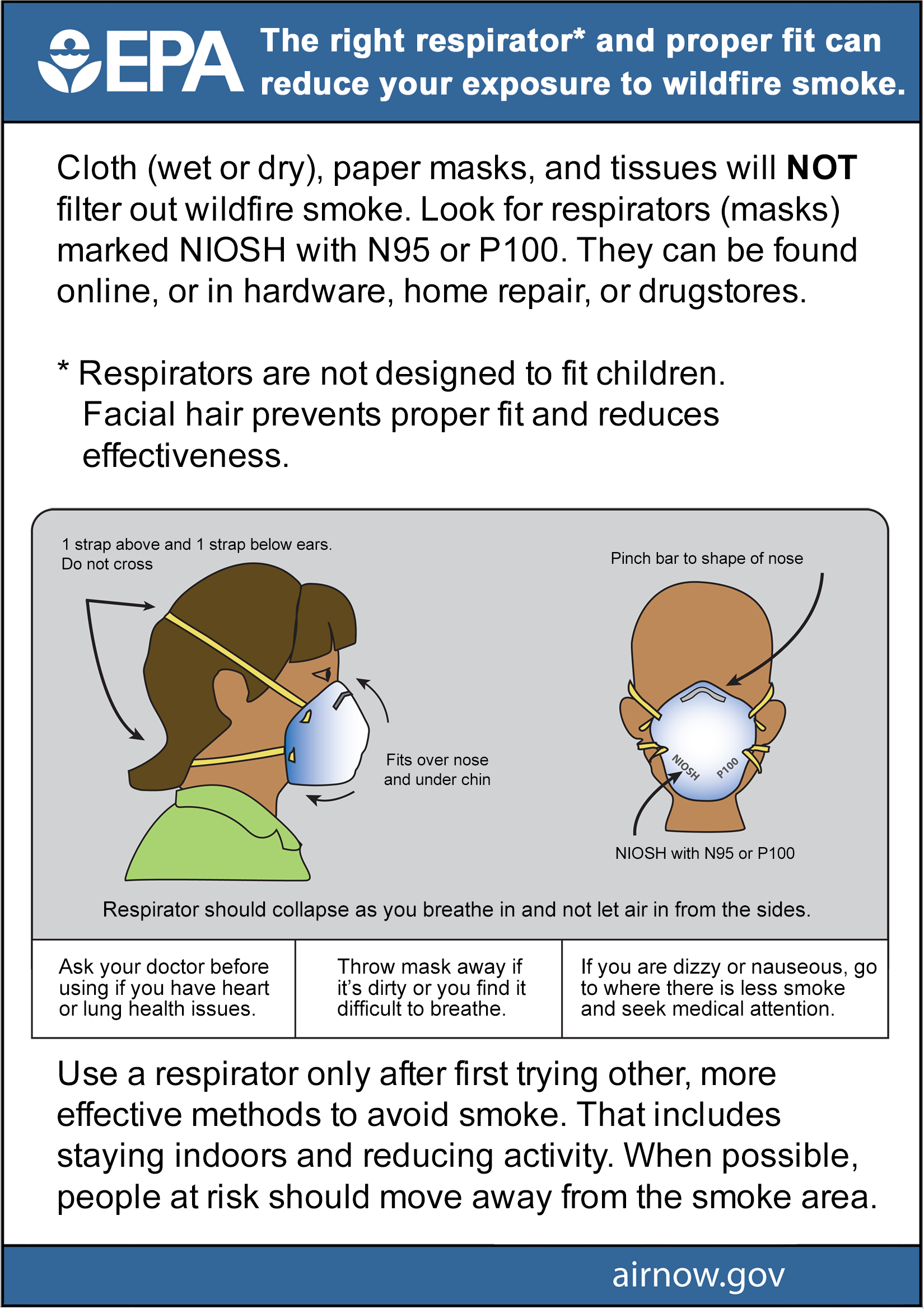
Outdoor activity is not recommended when the air quality index is orange or higher. With the AQI, the lower the number, the better and the colors are like a stoplight.
- Green (0-50) is great air quality and a go for normal activity.
- Yellow (51-100) is still good, but based on your sensitivity, you might want to think about your activity level.
- Orange (101-150) and red (151-200) indicate air quality is poor and you should stop and think about the potential impacts of your activities on your health. Monitor for symptoms.
- Purple (201-300) indicates the air quality is very unhealthy and everyone is affected.
- Maroon (301-500) indicates the air quality is hazardous.
Find out what the current air quality index is at www.AspenAirQuality.com.
-
Air Quality
If you must work outside when the air quality is poor, take measures to protect yourself and your employees:
- Wear an N95 or P100 mask.
- Hydrate.
- Limit heavy exertion.
- Take breaks inside a clean air environment.
- Make a clean air room at home.
-
Air Quality
At EPA’s AirNow.
-
Air Quality
-
Air Quality
The impacts of wildfire smoke on Aspen’s air quality can only be predicted for 1- 2 days. We recommend the following websites for more information about where smoke is moving and air quality levels:
-
Air Quality
It is hard to predict if Aspen will be impacted by wildfire smoke during your visit. Unfortunately, summers in the west and across the nation are regularly impacted by wildfire smoke. The best thing to do is be prepared. We encourage you to speak with your doctor about the impacts of wildfire smoke based on your current health.
You can find more information about wildfire smoke and air quality on the following websites:
-
Air Quality
Keep indoor air quality clean in your home by:
- Limiting stovetop cooking for either gas or electric.
- Not burning candles.
- Limiting vacuuming during an air quality event; vacuums can put a lot of dust and particles in the air.
- Closing windows and doors when the smoke hinders you from seeing five miles away and/or AQI is orange.
- Setting your air conditioning (AC) unit to “recirculate”.
- Opening windows to ventilate once the smoke dissipates.
Building IQ
12-
Building IQ
City-owned properties and large commercial properties (20k sq. ft. +) will be the first properties required to benchmark. Smaller commercial properties and multi-family properties will be phased over time.
This table shows the exact square footage of properties required to benchmark and by when:
Sector Property Properties first notice of upcoming benchmarking due date Property owners/managers collect property information and utility data Initial Reporting Date Calendar year of utility data to report in the first benchmarking year Date that property benchmarking information is included in annual aggregated community benchmarking report Covered City Properties All covered City properties N/A November 2021 - February 2022 June 30, 2022 2021 September 30, 2022 Covered Non-City Properties Covered Commercial properties ≥ 20k sq. ft. June 1, 2022 June 1, 2022 - November 2022 December 1, 2022 2021 January 30, 2023 Covered Commercial properties ≥ 15k sq. ft. January 1, 2023 January 1, 2023 - June 2023 June 1, 2023 2022 September 1, 2023 Covered Commercial properties ≥ 10k sq. ft. January 1, 2024 January 1, 2024 - June 2024 June 1, 2024 2023 September 1, 2024 Covered Commercial properties ≥ 5k sq. ft. January 1, 2025 January 1, 2025 - June 2025 June 1, 2025 2024 September 1, 2025 Covered Multifamily properties ≥ 20k sq. ft. January 1, 2023 January 1, 2024 - June 2024 June 1, 2024 2023 September 1, 2024 Covered Multifamily properties ≥ 15k sq. ft. January 1, 2024 January 1, 2025 - June 2025 June 1, 2025 2024 September 1, 2025 -
Building IQ
No, none of these residential buildings are required to benchmark under Ordinance No. 05.
-
Building IQ
Building owners required to benchmark under the Building IQ program need to input their property information and annual utility bill data into the EPA's ENERGY STAR® Portfolio Manager tool and share the information with the City of Aspen. The City's partner, the Community Office for Resource Efficiency (CORE), is available to help with this entire benchmarking process. Get started today by clicking here.
Owners of commercial properties 20,000 square feet and larger are required to get a building assessment, which looks at building performance and energy and water usage, and can be done for free through our partners at CORE. To schedule an assessment, click here.
-
Building IQ
For all help with benchmarking, contact CORE.
-
Building IQ
See table below for the list of properties 20,000 square feet or larger. The properties on this list have to benchmark and share the report with the City of Aspen by December 1, 2022.
Physical Address
465 N Mill St
637 E Hyman Ave
601 Rio Grande Pl
420 E Hopkins
520 E Durant Ave
411 E Main St
711 E Cooper Ave
205 S Mill St
300 Puppy Smith St
333 E Durant Ave
300 E Hyman Ave
120 N Mill St
506 E Main St
0076 Boomerang Rd
401 Castle Creek Rd
550 S Spring St
1450 Ute Ave
10 Club Circle
675 E Durant Ave
355 S Monarch St
310 E Main St
845 Meadows Rd
24 Prospector Rd
415 E Dean St
315 E Dean St
-
Building IQ
There is no charge to building owners or to the City of Aspen to use the ENERGY STAR® Portfolio Manager platform to benchmark.
Click here to schedule a free commercial energy assessment and portfolio consultation with the City's partner, the Community Office for Resource Efficiency (CORE).
-
Building IQ
By providing information about a building’s energy use and comparing its performance to similar buildings, benchmarking empowers building owners, managers, and other stakeholders to make more informed decisions, identify opportunities to improve energy and water use in their buildings, and save money. Evidence of these benefits is already available: by analyzing data from over 35,000 buildings that used the free EPA tool, ENERGY STAR® Portfolio Manager and received an ENERGY STAR® score from 2008 to 2011, US EPA found that average energy use declined by 7%. For more benchmarking trends, visit US EPA’s DataTrends Series, found at www.EnergyStar.gov/DataTrends.
-
Building IQ
ENERGY STAR® Portfolio Manager is a free online tool developed by the U.S. Environmental Protection Agency (US EPA) that allows you to track and assess energy and water use across your entire portfolio of buildings in a secure online environment. With Portfolio Manager, you can calculate the building's energy performance, compare it with similar buildings and monitor it over time. When you benchmark a building in Portfolio Manager, one of the key metrics you'll see is energy use intensity, or EUI.
The EUI expresses a building’s energy use as a function of its size or other characteristics. For most property types in Portfolio Manager, the EUI is expressed as energy per square foot per year. It’s calculated by dividing the total energy consumed by the building in one year by square footage. For many building types, Portfolio Manager calculates the ENERGY STAR® rating, which indicates how efficiently buildings use energy on a 1-100 scale, where a score of 50 indicates average energy performance. Buildings with a score of 75 or better are top performers and may be eligible for the ENERGY STAR® certification. Some building types are currently not eligible to receive an ENERGY STAR® score, but can still benefit from benchmarking, as Portfolio Manager calculates other energy performance metrics such as EUI.
-
Building IQ
No, per Ordinance No. 05 - Building IQ, property owners must use ENERGY STAR® Portfolio Manager to benchmark and report their covered buildings to the City of Aspen. Like many other jurisdictions across the nation, Aspen is using the reporting functionality of Portfolio Manager to ensure compliance with Building IQ.
-
Building IQ
Email Climate@aspen.gov and we are happy to help answer your questions.
-
Building IQ
If a covered property changes ownership, at the time of transfer, the former owner shall furnish to the new owner an electronic copy of the record representing the covered property within the benchmarking tool, utility customer consent documentation, (if any), the request to a qualified utility for aggregated data (if any), and any other information about the property that is necessary for benchmarking the covered property.
-
Building IQ
A UBID is a unique way to identify a property, building, or campus of buildings that is more specific than an address, parcel number, or building name. The City of Aspen is using UBIDs to attribute a unique identifier (separate from address or parcel numbers, which can be confusing) to properties under the Building IQ ordinance to ensure utmost clarity in property identification. Each property under the Building IQ ordinance will have a UBID, which the property owner will add to the property’s Portfolio Manager account.
Do you have questions about how to enter your UBID in Portfolio Manager? Click here for instructions, or get in touch with CORE.
Foodborne Illness
7-
Foodborne Illness
A foodborne illness (FBI) is a disease caused by consuming contaminated food or drink.
-
Foodborne Illness
Foodborne illnesses can be caused by bacteria, viruses, parasites, or toxins. Some of the most common types of diseases are Norovirus, Salmonella, and E. coli.
-
Foodborne Illness
The most common symptoms of foodborne illness are vomiting, diarrhea, and fever. In some cases, people may experience severe symptoms, such as bloody diarrhea, dehydration, and high fever.
-
Foodborne Illness
If you are experiencing severe symptoms or have any concerns about your health, please seek medical attention.
If you suspect you acquired a foodborne illness in Aspen, please report it to us at 970-920-075. More information on our reporting process and response can be found here.
-
Foodborne Illness
A foodborne disease outbreak is defined as an incident in which two or more persons experience a similar illness resulting from the ingestion of a common food.
-
Foodborne Illness
Anyone can get a foodborne illness, but certain groups of people are more likely to get sick and to have a more serious illness. This includes adults ages 65 years and older, children younger than 5 years of age, people with weakened immune systems, and pregnant women.
-
Foodborne Illness
Click here to learn about the four simple steps you can take at home to protect you and your loved ones from foodborne illnesses.
Short-Term Rentals
25-
Short-Term Rentals
If a property is located in the L Zone, it does not necessarily mean the property is eligible for an STR-LE Permit. A property must meet the definition of “Lodge” in Section 26.104.110 to be eligible for a Lodging Exempt Permit. Individual owners of units at lodge or condo-hotel properties are not eligible for the Lodging Exempt Permit and must apply for a Classic or Owner-Occupied Permit.
Powered by Froala Editor
-
Short-Term Rentals
A lodge is defined as a "building or parcel containing at least fifteen (15) individual units used for overnight lodging by the general public on a short-term basis for a fee, with or without kitchens within individual units, with or without meals provided and which has common reservation and cleaning services, combined utilities and on-site management and reception services." Lodge properties must also offer three or more specific amenities as defined by Aspen's land use code; please reference Section 26.104.110: "Lodge Uses" for more details.
Please note that STR Lodging-Exempt (LE) permits are not available to individual units at lodge properties. Owners wishing to operate outside of a lodge's LE permit must obtain a Classic or Owner-Occupied permit.
Powered by Froala Editor
-
Short-Term Rentals
Use the Permit Selection Flowchart to determine which STR permit(s) you may be eligible to apply for.
Powered by Froala Editor
-
Short-Term Rentals
If you believe an STR is in violation of Chapter 26.530 of the City of Aspen Municipal Code, you can file a complaint through Aspen 311 Connect.
Powered by Froala Editor
-
Short-Term Rentals
Yes, all Qualified Owner’s Representatives are required to have a current, valid business license from the City of Aspen Finance Department.
Powered by Froala Editor
-
Short-Term Rentals
If your QOR is a new MUNIRevs user, they will need to complete a new user registration using your 6-digit Account Number and Activation Code from the “Manage Your Account” section of your MUNIRevs Business Center. If your new Qualified Owner’s Representative (QOR) is an existing MUNIRevs account user, you can also contact the City of Aspen STR staff to have them added to your account.
Powered by Froala Editor
-
Short-Term Rentals
New permits in capped zones with waitlists are issued as permits become available through permit abandonment. Waitlist times vary by zone district and are influenced by numerous factors including property sales, rental activity and sales tax remittance, and timely renewal application submission for permitted properties. Waitlist time predictions can be estimated by City staff upon request; however, they are based on limited program data and consideration must be given to unpredictability of participant behavior. Online waitlists are updated quarterly and are available on the STR Waitlists page. You can also contact City staff for the most up-to-date waitlist information.
Powered by Froala Editor
-
Short-Term Rentals
Permittees who do not live within the Roaring Fork Valley or Colorado River Drainage from No Name to Rifle are required to name a Qualified Owner’s Representative (QOR) on permit applications. Permittees who live within the Roaring Fork Valley or Colorado River Drainage but are unable or unwilling to be available for in-person emergency response must also name a QOR for their STR unit.
Powered by Froala Editor
-
Short-Term Rentals
Brokers with a licensed real estate company may use the real estate company’s business license.
Powered by Froala Editor
-
Short-Term Rentals
STR permits require that a permittee has at least 10% ownership of the property. If the property owner is willing to be named as the permittee, then the lessee could act as the Qualified Owner’s Representative (QOR) if they can fulfill the requirements of the Qualified Owner’s Representative as outlined in Chapter 26.530 and the STR Program Guidelines.
Powered by Froala Editor
-
Short-Term Rentals
The wildlife protection policy is printed on the STR permit document that the permittee will receive once the permit is issued.
-
Short-Term Rentals
STR operators are required to display the STR permit, in-unit messaging, STR business license, and Good Neighbor Guide in an obvious location in the STR unit. Acceptable locations include inside an informational binder, on the coffee table, displayed in frames, or other places where the renters can easily access the information.
Powered by Froala Editor
-
Short-Term Rentals
The permit number should be included in all third-party advertisements such as on VRBO, Airbnb, or similar. The permit number can be included in the advertisement title, description of the property, or in the part of the posting specifically designated by the third-party company.
-
Short-Term Rentals
Permittees named on STR permits will need an STR-specific business license. Qualified Owner’s Representatives (QORs) will need either an STR-specific business license, or, if applicable, they may use the business license associated with their real estate or property management firm (these are most often “real estate” business licenses).
Powered by Froala Editor
-
Short-Term Rentals
If your residence is located within Aspen city limits, you will only need an STR permit through City of Aspen. If your residence is located outside of Aspen city limits, you’ll only need a Pitkin County STR Permit. Find out whether your residence is in or out of Aspen.
Powered by Froala Editor
-
Short-Term Rentals
All permit applications require the full name of one person with an ownership interest in the property. If the title to the STR property is held by a corporation, partnership, association, trust, or similar entity, the name and contact information of any officer, director, or stockholder holding at least 10% of interests in the entity is required as the “Permittee” on the application.
Powered by Froala Editor
-
Short-Term Rentals
Permittee contact information may not be changed after a permit is issued as permits are non-transferable. Changes to permittee information will result in the termination and revocation of a permit and the new permittee will be required to apply for a new permit.
-
Short-Term Rentals
After a new STR-Classic or STR-Owner-Occupied permit application is reviewed, the applicant moves on to a Public Notice before the permit is issued. The purpose of this step is to inform neighbors of the applicant’s intent to operate their property as a short-term rental. Applicants must post a notice at the property for a minimum of 15 days, as well as send a written notice to neighboring property owners within 300 feet of the STR property. Reference the STR Program Guidelines for a detailed description of the Public Notice process and requirements for new Classic and Owner-Occupied STR permits.
Powered by Froala Editor
-
Short-Term Rentals
Each STR permit application lists the required supplemental documents necessary to submit with the application type. Required documents are also listed for each permit type in the STR Program Guidelines.
Powered by Froala Editor
-
Short-Term Rentals
Rentals of 30 days or more are considered “long-term rentals” and do not require an STR permit from the City of Aspen. Long-term rentals require a business license from the Finance Department. Please contact aspensalestax@aspen.gov for more information about long-term rental requirements.
Powered by Froala Editor
-
Short-Term Rentals
The STR GIS map shows properties with current, approved STR permits. To find out if a property has a permit, simply type in the property address and search. You may alternatively email strs@aspen.gov to inquire whether a property has a current STR permit.
Powered by Froala Editor
-
Short-Term Rentals
Permits may not be transferred between addresses
Powered by Froala Editor
-
Short-Term Rentals
Public notices are required as a part of the application process for all new Classic and Owner-Occupied STR permits. Before a new permit is issued, permittees must post a notice at their property for 15 days and mail a notice to all property owners within 300 feet of the property for which they are seeking the new STR permit. The purpose of the public notice is to make neighbors aware of the new STR use for which the applicant is seeking a permit. If desired, neighbors can provide public comment about the application using the contact information provided in the notice.
-
Short-Term Rentals
Explore the STR Map to determine which zone district your property is located in.
Powered by Froala Editor
-
Short-Term Rentals
Explore the STR Eligibility Map to determine whether STRs are permitted in your zone district.
Engineering - New Castle Creek Bridge - Project History
7-
Engineering - New Castle Creek Bridge - Project History
1961 - The current Castle Creek Bridge was built with a maximum lifespan of 75 years (2036).
1995 - The community, Aspen City Council, Pitkin County Commissioners, Town of Snowmass Village Council, CDOT, and FHWA developed the project need, intent, and 10 project objectives.
1996 - 59% of Aspen voters said, “yes” (41% “no”), to authorize a right-of-way over Marolt and Thomas properties for a two-lane parkway and corridor for light rail with a number of stipulations.
1997 - Final Environmental Impact Statement (FEIS) was completed.
1998 - Record of Decision (ROD) was finalized.
2000 - Roundabout construction was completed.
2001 - 54% of Aspen voters said, “no” (46% voted, “yes”), to change the right-of-way over Marolt and Thomas properties for a two-lane parkway and exclusive bus lanes until the community supported light rail funding.
2007 - The reevaluation of the ROD proved the document and plan were still valid.
2007 - Comprehensive community outreach was completed with no clear political consensus on a path forward.
2009 - BRT lanes were implemented from the airport to the roundabout.
2015 - Rubey Park Transit Center was completed.
2018 - 8th Street bus stop improvements and pedestrian safety improvements were completed.
-
Engineering - New Castle Creek Bridge - Project History
Community-Based Planning: An inclusive process focused on limiting vehicle trips to decrease downtown congestion.
Transportation Capacity: Meets future traffic capacity needs, but keeps vehicle trips to the level in 1994.
Safety: Addresses concerns like pedestrian safety and higher-than-average accident rates through the S-Curves.
Environmentally Sound Alternative: Minimizes and mitigates adverse impacts.
Community Acceptability: Fits the character of the community and is aesthetically acceptable to the public.
Financial Limitations: Realistic current and expected funding levels and programs.
Clean Air Act Requirements: Limits vehicle trips to manage air quality in accordance with local and national goals.
Emergency Access: Provides an alternative route over Castle Creek for emergency vehicles to access incidents inside and outside of downtown.
Livable Communities: Keeps within the small town character and scale of the Aspen community, which enhances the quality of life for residents and visitors.
Phasing: Provides phasing so future transit options can be accomplished.
-
Engineering - New Castle Creek Bridge - Project History
- Roaring Fork Valley Residents
- Aspen City Council
- Pitkin County Commissioners
- Town of Snowmass Village Council
- Colorado Department of Transportation (CDOT)
- Federal Highway Administration (FHWA)
-
Engineering - New Castle Creek Bridge - Project History
The 10 project objectives are evaluation criteria for the Entrance to Aspen. They were developed by our community in 1994. While the development process for a Record of Decision (ROD) always includes public participation, it is unusual that community-defined objectives are included in a ROD.
The Draft Environmental Impact Statement (EIS), on Page I-3 of August 1995, further states:
“The objectives were developed based on known problems and concerns related to the State Highway 82 transportation system and corresponding issues raised by the Aspen area community. Consensus on the objectives was developed from the affected agencies, elected officials and staff of area governments, concerned members of the public through a series of individual meetings (community focus groups, open house exhibitions, community leadership workshops) and a technical advisory committee (TAC) consisting of various local governments and state and federal agency staff.” -
Engineering - New Castle Creek Bridge - Project History
The bridge was designed for a 50-year lifespan. It was built in 1961, meaning it past the end of its design life. Several factors contribute to this lifespan, including that the bridge was never designed for today's volume of traffic. As a result, an increased need for repairs and/or replacement is expected.
-
Engineering - New Castle Creek Bridge - Project History
A number of elements of the Preferred Alternative have been implemented since 1998, including the Maroon Creek Bridge, roundabout, pedestrian overpasses over Maroon Creek and Castle Creek Roads, Harmony Road underpass and intersection improvements, Owl Creek Road realignment and new signals at Highway 82 at Buttermilk Mountain, the Main Street bus lane addition, new signals on Highway 82 at Buttermilk, and conveyance of right-of-way. (In 1996, Aspen voters approved an easement across Marolt-Thomas Open Space for two lanes and a light rail in exchange for Mills Ranch property as open space.)
-
Engineering - New Castle Creek Bridge - Project History
Yes. To ensure this, they will be re-evaluated again by a consultant team, CDOT and FHWA.
Engineering - New Castle Creek Bridge - Preferred Alternative
32-
Engineering - New Castle Creek Bridge - Preferred Alternative
A Preferred Alternative (PA) is part of and described in a Record of Decision (ROD). An alternative is determined to be the Preferred Alternative if it best meets the purpose and need of the project. The Preferred Alternative is determined during the environmental review process and documented in the Record of Decision.
-
Engineering - New Castle Creek Bridge - Preferred Alternative
CDOT and the FHWA determined that the Preferred Alternative met the project need, intent, and 10 objectives.
Increases future transit options like trackless trams or driverless buses.
Provides better emergency access and evacuation routes.
Reduces accident rates on the S-Curves.
Increases transit capacity while decreasing transit time with continuous bus lanes from the roundabout to downtown.
Eliminates the S-Curves so traffic will move more smoothly without the two, ninety-degree turns.
Creates direct access in and out of town due to a straighter alignment.
Creates an open space corridor connecting Marolt-Thomas Open Space to the Aspen Golf Course.
Creates a trail connection from the Marolt Bridge to the golf course that is uninterrupted by roadways.
Decreases traffic and congestion in the West End and Cemetery Lane neighborhoods.
-
Engineering - New Castle Creek Bridge - Preferred Alternative
The National Environmental Policy Act (NEPA) process for the State Highway 82 (SH 82) Entrance to Aspen project began in January 1994. A Draft Environmental Impact Statement (DEIS) was released for public review and comment in August of 1995. The DEIS evaluated three alternatives between Buttermilk and Maroon Creek Road, and seven alternatives between Maroon Creek Road and the intersection of 7th and Main Street. As a result of comments on the DEIS from community members and other local partners, the Colorado Department of Transportation (CDOT) expanded the analysis to include new alternatives and extend the project limits to Rubey Park in Aspen. The Supplemental Draft EIS (SDEIS) evaluated three additional alternatives between Pitkin County Airport and Rubey Park. The SDEIS was released in July of 1996. In August of 1997, the final EIS was released. The Record of Decision (ROD) was developed as an output of the final EIS. The ROD, which includes the Preferred Alternative, was released in August of 1998.
-
Engineering - New Castle Creek Bridge - Preferred Alternative
The Preferred Alternative is the approved option; it is not a silver bullet.
Travel times for general-use vehicles will improve by a couple of minutes, but will not solve the traffic or congestion problems.
The Preferred Alternative will increase travel times from Cemetery Lane to the hospital, Aspen schools, and Aspen Highlands.
The Preferred Alternative requires the existing Castle Creek Bridge to be repaired and eventually replaced to provide traffic access to Cemetery Lane and McLain Flats. It will also serve as a second exit from town.
-
Engineering - New Castle Creek Bridge - Preferred Alternative
Nine travel modes were analyzed before the Preferred Alternative was selected. These included:
- Unproven Technology: Transit systems that were under research and development at the time. They were screened out at the reality check level, as one of the criteria required modal options to be in revenue service to pass the reality check screen.
- Personal Rapid Transit: A public transit mode using small, automated vehicles operating on a network of dedicated guideways.
- Commuter Rail: A heavy rail system (not a light rail) that requires a fixed guideway system and a separate right of way.
- Wire Rope Systems: Wire rope-propelled systems are like gondolas and chair lifts that require overhead cables and pole supports. Note: After the ROD was developed, wire rope systems using the drive under passenger cabins were developed (ex. Doppelmayr Cable Car). The capacity and trips that can be served by this technology are limited.
- Guided Busways: The mechanically guided bus system evaluated in the EIS operates in a U-shaped concrete track that guides the bus without help from a driver. A driver controls the speed and deceleration of the bus. This option was evaluated in more detail in earlier Aspen to Snowmass transportation projects. From a comparative evaluation, the mechanically guided busway was a relatively high-cost option versus the self-propelled bus and electric trolley technologies. This option was screened out at the comparative screening level based on the project objectives and key issues including cost, maintenance, and community acceptability. Since the ROD, new applications for guided buses have been developed using optical markings in the roadway and radar guidance. The new applications for guided buses involving optical markings will not work in winter conditions.
- HOV: A managed lane that allows high-occupancy vehicles (HOVs) during all day and/or peak-hour. HOVs are self-propelled vehicles having a minimum of two or more passengers including the driver in the vehicle.
- Self-propelled buses: Two general types of self-propelled buses were considered (diesel, natural gas, and now electric). Self-propelled buses can be run in mixed traffic or in a separate managed lane. This option passed the comparative screen and is a component of the Preferred Alternative. It comprises the initial phase transit system.
- Electric Trolley Buses: Electric trolley buses are essentially the same as self-propelled buses, but are propelled by an electric motor and obtain power from two overhead electric wires. Electric trolley buses are rubber tired and operate in mixed flow conditions.
- Light Rail Transit (LRT): LRT is a mode that runs on standard gauge rail. LRT can operate in a lane next to general traffic or even in the same lane (e.g., RTD in downtown Denver). LRT operates most efficiently in a separate, dedicated right-of-way. Power is provided by an overhead electric system in mixed flow conditions by either overhead electrical wires or a third electrified rail when they run in a separate right-of-way period. This option passed the comparative screen and is a component of the Preferred Alternative. It comprises the final phase transit system. This can be implemented now, however the costs of this system outweigh the available funding.
-
Engineering - New Castle Creek Bridge - Preferred Alternative
In 1996, a question was placed on the ballot to authorize City Council to use or convey to the State of Colorado, Dept. of Transportation, necessary rights of way across City owned property, including the Marolt Property and the Thomas Property for purposes of constructing a two lane parkway and corridor for light rail transit, with light rail to be constructed when funding was available. This vote passed with 59% of the votes in favor.
Construction of a roadway that would potentially rely on Federal funds is a complicated process that may require action through the National Environmental Protection Act (NEPA), which includes an Enivronmental Impact Study (EIS) then adoption of a Record of Decision. This process was undertaken after the 1996 vote, and a Record of Decision (ROD) including the “Modified Direct” alignment as the Preferred Alternative incorporating use of the Marolt and Thomas properties was established for the Entrance to Aspen in 1998.
The 1996 vote only approved a two-lane parkway and a light-way corridor, but did not address use for a bus system. The ROD and Preferred Alternative contemplates a bus system. Therefore, additional voter approval was needed before the City could pursue the preferred alternative. Referendum 2 in 2025 provided that voter approval.
-
Engineering - New Castle Creek Bridge - Preferred Alternative
No. On March 4, 2025 Aspen voters approved Referendum 2. Voter approval of Referendum 2 authorizes the use of designated portions of Marolt and Thomas properties identified in the 1998 Record of Decision for purposes of realigning Colorado Highway 82. Further, as stated in the ballot language: “Voter Approval of this measure permits the Colorado Department of Transportation (CDOT) to proceed with both planning and construction activities under the current Record of Decision (ROD)…” Thus, no additional vote is required under the current City Charter if the preferred alternative is constructed and busways are utilized. Further, passage of Ref. 2 constitutes a vote for purposes of using these designated areas for purposes of realignment of Highway 82 under the Charter if a future preferred alternative or record of decisions were issued.
-
Engineering - New Castle Creek Bridge - Preferred Alternative
An estimate from 2022/2023 said that the process for design and construction could take up to 12 years.
Jacobs Engineering provided an estimate in 2024 that environmental approvals, design, bidding and construction for the phased preferred alternative, which does not include construction of the light rail, could take approximately 4 1/2 years to 5 1/2 years.
-
Engineering - New Castle Creek Bridge - Preferred Alternative
The Record of Decision was intended as a phased approach. Elements that have been completed as of 2022 include:
- Maroon Creek Bridge.
- Roundabout.
- Pedestrian overpasses over Maroon Creek and Castle Creek Roads.
- Harmony Road underpass and intersection improvements.
- Owl Creek Road realignment and new signals at Highway 82 at Buttermilk Mountain.
- Main Street bus lane addition.
- New signals on Highway 82 at Buttermilk.
- Conveyance of right-of-way. In 1996, Aspen voters approved an easement across Marolt-Thomas Open Space for two lanes and a light rail in exchange for Mills Ranch property as open space.
- Transit Management Program. Programs and policies encourage people to use the bus, bike, or walk.
In addition, the City of Aspen implemented additional programs with the intent of increasing the use of alternative modes of transportation. These include:
- Main Street bus lane.
- Roaring Fork Valley vehicles car share program.
- Carpool matching and parking programs.
- Transportation Options Program that provides grants and other benefits to employers.
The next phase of the ROD is the Highway 82 realignment and a new Castle Creek Bridge.
-
Engineering - New Castle Creek Bridge - Preferred Alternative
- Parking Structures
- Open Space connection to Aspen Golf Club
- Land Bridge
- The Castle Creek Bridge
- Right of Way improvements on Main Street
-
Engineering - New Castle Creek Bridge - Preferred Alternative
No.
First, in 1981 the right of way was platted across the Marolt property for the extension of Highway 82. In 1996, voters approved using the right of way through the Marolt and Thomas properties for a two-lane parkway, one lane in each direction for any vehicle, and light rail.
On March 4, 2025 voters approved the use of bus lanes, which are part of the interim Preferred Alternative solution. The 1996 voter approval included a provision to replace the Marolt and Thomas open space with open space of equal value and equal or more significant acreage to replace any net loss in open space. Mills Property, 39.6 acres of open space located along the Roaring Fork River behind the Brush Creek Intercept Lot, was acquired to fulfill the replacement requirement.
-
Engineering - New Castle Creek Bridge - Preferred Alternative
CDOT and FHWA are involved in the New Castle Creek Bridge project because Highway 82 is a state highway that also receives federal funding. Both organizations have to be involved in the decision making process. SH 82 is part of the National Highway System. In addition, SH 82 crosses federal waters (Maroon Creek and Castle Creek), which mandates that the FHWA be involved. While Aspen voters can veto or accept whatever ballot issues arise related to the Entrance to Aspen, the state and federal governments’ process is to produce a Record of Decision (ROD) with a Preferred Alternative that identifies and mitigates environmental impacts.
-
Engineering - New Castle Creek Bridge - Preferred Alternative
If the community does not want to build the Preferred Alternative AND wants to explore another alternative, it will require opening the Record of Decision (ROD) or creating a new ROD. It is was estimated in 2022, that the process would cost approximately $7-8 million and take four to eight years to complete, depending on which of the other alternatives the community would want to pursue.
Jacobs Engineering has estimated project costs pursuing different alternatives, including the federal NEPA process. Information regarding those estimates is available in this presentation slide deck from August 12, 2024. (p. 38)
-
Engineering - New Castle Creek Bridge - Preferred Alternative
The Federal Highway Administration (FWHA) and the Colorado Department of Transportation (CDOT) chose the Preferred Alternative (PA) because they found that it best met the 10 Project Objectives the community and elected officials identified and it fulfilled the project’s purpose and need. The Preferred Alternative was chosen after years of analysis which took into account such things as traffic congestion, traffic forecasts, safety, the environment, and costs, to name just a few of the considerations.
-
Engineering - New Castle Creek Bridge - Preferred Alternative
Yes and no. It depends on the extent of the modification. Small design changes can be handled through a reevaluation however larger changes such as use and alignment would require a new Record of Decision.
-
Engineering - New Castle Creek Bridge - Preferred Alternative
Some residential properties will be impacted. The City does not know the precise location of the bridge and the extent of the impact to residential properties until there has been further design and additional study of the Preferred Alternative, which is the next step that has been authorized by Council.
-
Engineering - New Castle Creek Bridge - Preferred Alternative
Property acquisition will follow the federal Uniform Act process. In most cases, the first step in acquisition is determination of value through appraisal of all real property that needs to be obtained for the project. Acquisition of real property can include the entire parcel, only a portion of the property, or a specific type of interest such as a permanent or temporary easement.
-
Engineering - New Castle Creek Bridge - Preferred Alternative
No additional vote is required under the current City Charter if the preferred alternative is constructed and busways are utilized. Further, passage of Ref. 2 constitutes a vote for purposes of using these designated areas for purposes of realignment of Highway 82 under the Charter if a future preferred alternative or record of decisions were issued.
-
Engineering - New Castle Creek Bridge - Preferred Alternative
Transit stop locations and routes will need to be evaluated to determine the needed services for these neighborhoods.
-
Engineering - New Castle Creek Bridge - Preferred Alternative
There will be a light at this intersection however how the intersection will look will need to be evaluated at a later stage in the project
-
Engineering - New Castle Creek Bridge - Preferred Alternative
This design detail has not been finalized, however, there will be vehicle and ADA access to the museum.
-
Engineering - New Castle Creek Bridge - Preferred Alternative
This design detail will be developed during the schematic design development. The City of Aspen plans to work closely with the Open Space and Trails Board as well as the Parks Department and the community to develop a plan for the summer and winter trails.
-
Engineering - New Castle Creek Bridge - Preferred Alternative
Yes. The possibility of two land bridges is being considered.
-
Engineering - New Castle Creek Bridge - Preferred Alternative
They will go to the 7th/Main Street light and take a left onto 7th to go through the S-Curves. During the next phase of the project, a traffic study and origin and destination study will provide additional information about the specifics related to the future traffic timing.
-
Engineering - New Castle Creek Bridge - Preferred Alternative
It will not solve congestion. It is a transit-oriented solution that will improve transit timing.
-
Engineering - New Castle Creek Bridge - Preferred Alternative
It will impact the experience of driving into Aspen. Exactly how will be determined by the final design and construction plans.
-
Engineering - New Castle Creek Bridge - Preferred Alternative
An option for four lanes was considered during the review of the 43 options considered during the Environmental Impact Statement. Four lanes of unrestricted traffic didn't meet the community-based planning goals and because it didn't include the incentive for transit and carpooling which are critical to maintaining the 1993 traffic levels.
-
Engineering - New Castle Creek Bridge - Preferred Alternative
CDOT will make sure the traveling public is safe at all times and will do so in a fiscally responsible manner.
-
Engineering - New Castle Creek Bridge - Preferred Alternative
Yes. The current bridge will be the way the Cemetery Lane and McLane Flats residents get into town. Once the new bridge is built the original bridge will be repaired.
-
Engineering - New Castle Creek Bridge - Preferred Alternative
If the Preferred Alternative is built Power Plant Road will remain the same. If the existing bridge is reconstructed it will need to be rebuilt do accommodate traffic during construction would last 3-4 years long.
-
Engineering - New Castle Creek Bridge - Preferred Alternative
Information from 2022/2023 said that the project to develop design documents and build the Preferred Alternative is estimated to be 8-12 years.
Jacobs Engineering provided an estimate in 2024 that environmental approvals, design, bidding and construction for the phased preferred alternative, which does not include construction of the light rail, could take approximately 4 1/2 years to 5 1/2 years.
-
Engineering - New Castle Creek Bridge - Preferred Alternative
Yes. CDOT will continue to do repairs to keep it safe for the traveling public.
Aspen 3-1-1 Connect
15-
Aspen 3-1-1 Connect
Currently, the City of Aspen is working through the requirements to offer this service. We hope to have the approvals needed to provide 311 phone routing later this year. Please check back for more information on developments.
-
Aspen 3-1-1 Connect
To start, either download the app on your mobile device via Apple or Google Play, or use the online portal. Then, follow the prompts (Sign Up, Login, New Request, Submit). Find the appropriate category for your submission in order to avoid any delays. If you have trouble finding the right category, you can click "Other/Miscellaneous".
-
Aspen 3-1-1 Connect
You can use Aspen 311 Connect to request City services and information. Examples of typical submissions include:
- Pothole issues
- Street light repair
- Parking issues like illegally parked vehicles or abandoned cars
- Illegal dumping
- Questions or kudos for City of Aspen employees
-
Aspen 3-1-1 Connect
You have the choice of downloading the app on either iPhone or Android, or using the online portal. To find the app in the app store, search for "Aspen 311". The portal is a webpage and has very similar functionality to the app.
-
Aspen 3-1-1 Connect
When submitting a ticket, if you leave the "Subscribe to this Request" checkbox checked, you will receive an email every time there is activity with your ticket. To opt out of emails on any ticket, unclick this box. You can always check your submissions using the mobile app's View Requests -> My Requests feature.
-
Aspen 3-1-1 Connect
Tickets in Aspen 311 Connect are not checked on weekends, holidays, or non-business operation hours. However, you can submit your communication at any time, 24/7/365. When City business hours resume, staff will receive and read your ticket.
-
Aspen 3-1-1 Connect
Employees of the City of Aspen reply to Aspen 311 Connect communications.
-
Aspen 3-1-1 Connect
Aspen 311 Connect is for CIty of Aspen services only. Please DO NOT attempt to contact Pitkin County or CDOT through the City's 3-1-1 app or online portal.
Contact Pitkin County directly on topics like:
- COVID vaccinations and testing.
- Court-related issues or questions, unless it is for research on ordinance violations, speeding, and disorderly conduct.
- Motor vehicle issues such as registration or VIN inspections.
- Anything fire-related such as smoke alarms and fire extinguishers.
Please contact the Colorado State Patrol (1-303-239-4500) or CDOT directly about topics like:
- Dead animals on the side of the road.
- Traffic lights outside the City of Aspen boundaries (past Truscott).
-
Aspen 3-1-1 Connect
You must have submitted your communication by signing up and using your profile (non-anonymous). If you log into Aspen 311 Connect, you are able to view tickets you submitted and check on their status.
-
Aspen 3-1-1 Connect
Aspen 311 Connect allows you to reset your password using a "Forgot Password" link. Clicking this link will send an email to your account, then you will be able to reset your password.
-
Aspen 3-1-1 Connect
Some categories may appear less self-explanatory than others. Here are some common categories and the type of information you can access through them:
- Air Quality Complaint - Vehicles are not allowed to idle for more than five minutes in Aspen because the City is in a box canyon. Air can quickly become polluted. If you see anything threatening our air quality, you can use this category to ask about it or report it.
- Gas Powered Leaf Blower - Gas-powered leaf blowers are only allowed to be used in certain areas at certain times. Use this category to ask about or report a problem with a leaf blower.
- General Noise Issue - This type of noise is handled by Environmental Health & Sustainability (EHS), and includes neighbor noise. Other types of noise are handled by other departments. For instance, Engineering handles construction noise, and Special Events handles noise associated with special events.
- Parking - Ask questions about parking or report illegally parked or abandoned vehicles. IF YOU WISH TO DISPUTE A PARKING TICKET, address it through the Parking System.
- Snow Removal - Snow removal is performed by different entities depending upon where the snow must be removed. Snow falling is handled by different departments in these areas: Streets, Trails, Private Sidewalks, The Downtown Mall, Mill Street Bridge Sidewalk, and Entrances to Alleyways and ADA ramps in Aspen Core. If you want to report a need for snow removal, please be very specific about where and on what the snow has accumulated. This will help route your request more directly to the appropriate department. The City of Aspen, through Aspen 311 Connect, does not handle snow and ice removal requests from sidewalks EXCEPT for the Pedestrian (Downtown) Mall, Mill Street Bridge, and the Red Brick Center for the Arts. Property owners are responsible for snow removal in front of their properties. Enforcement of private sidewalk snow removal is handled by Community Resource Officers (police) and requests can go through their "Report a Crime" form.
- Trash Receptacles - If a City of Aspen trash receptacle is damaged and there is a possibility of danger due to bears, please contact the Aspen Police Department at 970-920-5400.
- Tree Lights - The zoning department handles concerns about holiday lights.
-
Aspen 3-1-1 Connect
Aspen 311 Connect is a customer service platform that allows community members to request assistance with city services and information. Do you have a concern, request, question, or kudos you’d like to send to us? Submit it through the Aspen 311 Connect Apple or Google Play app on your mobile device, or online.
-
Aspen 3-1-1 Connect
Built for use on your mobile device, the mobile app, via Google Play and Apple, allows you to easily connect with your local government right where you are - whether that is at a desk or on the go. To find the app in the app store, search for "Aspen 311".
-
Aspen 3-1-1 Connect
When submitting a request, multiple layers of identification can be invoked or circumvented, depending on how the user decides to interact with the application.
The first layer is user registration. A user may opt to register an account, providing name, contact information, and ultimately creating credentials that can be used to allow the City to identify the submitter. While this is not mandatory, it is highly recommended, so the City can easily respond to the submitter and handle the request.
If a user decides to log in as a guest, they have either not registered at all or have logged out of their account. In this instance, they are anonymous to both the City and the public. However, it is likely that a request submitted anonymously cannot be handled by the City – particularly if the request is of a certain nature (complaint about zoning, construction, etc.)
The second layer is anonymity. Just before submission of a ticket, there is an option to submit anonymously at the bottom of the request form. If you select this option, the City will have no registration-based information to tell them who submitted the ticket, even if you are logged in. The public will also be unable to view who submitted the ticket. It is complete anonymity. Again, this means that if the City does not collect your name and contact information by some other method, they will likely not be able to process your request.
For this reason, some categories will ask for submitter and contact information that will be visible to the City, but not to the public online. You will be able to identify these fields because below the field will be the words, “Not displayed publicly”. While this information will then be removed from display on the application when viewed by the public, the information will be received by the City, and available to the public if requested pursuant to a Colorado Records Request.
*** IMPORTANT NOTE: Please be advised that information provided to the City through the Aspen 311 Connect website or application will be subject to public disclosure pursuant the Colorado Open Records Act, Colo. Rev. Stat. sections 24-72-201, et seq.
-
Aspen 3-1-1 Connect
- Aspen 311 Connect is NOT for emergencies. For emergencies, call the police, or 911.
- Aspen 311 Connect is for questions, requests, comments, concerns, and kudos. Anything that does not necessarily require an immediate response is great for Aspen 311 Connect. The City of Aspen has a commitment to respond promptly.
- Aspen 311 Connect is not for all non-emergencies; Aspen Police handles some non-emergency issues. Contact the police directly for certain issues to elicit a faster response than using Aspen 311 Connect. These issues include things like:
- Elevator alarms
- VIN inspections
- Trespass/burglary
- Aspen 311 Connect is great for reaching City departments directly.
Single Use Bag Fee
9-
Single Use Bag Fee
In October of 2011, Aspen City Council adopted Municipal Code 13.24 – Waste Reduction prohibiting the distribution of single-use plastic carryout bags at the two grocery stores in the City of Aspen -- City Market and Clarks Market. The legislation implemented a $0.20 fee on all paper bags utilized by customers.
In 2021, the Colorado General Assembly enacted House Bill 21-1162 Plastic Pollution Reduction Act (PPRA) to manage the distribution of single-use materials such as plastic and polystyrene in the state.
While the PPRA requires all applicable stores in Colorado to charge a $0.10 fee on all single-use, carryout bags, the City of Aspen’s ordinance increases the PPRA’s $0.10 per bag fee to align with the existing code, raising the fee to $0.20 per bag. Retailers will remit $0.16 per bag to the City.
The revenue collected from the single-use bag fees are transferred to the City monthly and are allocated to a Waste Reduction Fee fund only to be used for specialized waste reduction projects. This revenue supports projects including the annual purchasing of reusable bags for free distribution around the city and hosting the free electronic waste collection event for individuals to recycle their electronics.
Click here to read Ordinance 06 of 2023.
Read the Single Use Bag Study (PDF) to learn more about how the Reusable Bag Program is working. Click here for a sample of a sign.
-
Single Use Bag Fee
Charge $0.20 for each single-use carryout bag distributed to a customer. The fee cannot be internalized by the company and must be charged and itemized on the receipt.
Remit payment of $0.16 for each bag to the City of Aspen on a quarterly basis:
- April 20th
- July 20th
- October 20th
- January 20th
Stores must provide a sign notifying customers of this program.
Restaurants, small stores (as defined in question 7), farmers markets, and participants of federal, state, or local assistance programs are exempt from the law’s requirements.
-
Single Use Bag Fee
Remitted fees are used for administrative, enforcement costs and costs associated with any recycling, composting, or other waste diversion programs and activities. The revenue will be put into a Waste Reduction Fee fund only to be used for specialized waste reduction projects. This revenue supports projects, including the annual purchasing of reusable bags for free distribution around the city and hosting the free electronic waste collection event for individuals to recycle their electronics.
-
Single Use Bag Fee
As of July 1st, 2024, stores are prohibited from distributing plastic bags, and must only offer recycled paper carryout bags. This requirement does not include small, lightweight bags to collect items inside a store like produce, bulk food or deli items, or prescription medications.
-
Single Use Bag Fee
According to Colorado state statute, "Reusable carryout bag" means a carryout bag that is designed and manufactured for at least one hundred twenty-five uses, can carry at least twenty-two pounds over a distance of one hundred seventy-five feet, has stitched handles, and is made of cloth, fiber, or other fabric or a recycled material such as polyethylene terephthalate (pet).
-
Single Use Bag Fee
- You can provide your customers with reusable carryout bags or paper bags made with 100% recycled content.
- Restaurants are exempt from the law’s requirements.
-
Single Use Bag Fee
Yes. Some retailers are exempt and are not required to phase out plastic checkout bags or charge a $0.20 bag fee. Exempt retailers may choose to opt-in the program and charge the $0.20 bag fee.
Exempt businesses include:
- “Small” stores: stores with three or fewer locations operating solely in Colorado and are not part of a franchise, corporation, or partnership with locations outside of Colorado
- Restaurants
- Farmers and roadside markets
- Anyone who can prove that they participate in a federal, state, or local assistance program
If you provide your costumers with reusable bags, reach out to waste@aspen.gov to determine if the bag is exempted from the bag fee.
-
Single Use Bag Fee
The most effective thing would be to look for ways to no longer use single-use carryout bags of any kind at your store. Promoting the use of reusable bags is encouraged as much as possible.
-
Single Use Bag Fee
While the PPRA requires all applicable stores in Colorado to charge a $0.10 fee on all single-use, carryout bags starting Jan. 1, 2023, the City of Aspen’s ordinance increases the PPRA’s $0.10 per bag fee to align with the existing code approved in 2011, raising the fee to $0.20 per bag.
City of Aspen Grants FAQ
7-
City of Aspen Grants FAQ
Yes, general operating requests are considered.
-
City of Aspen Grants FAQ
- A list of your organization's Board members. Please include names, titles, and term expiry for all Board members.
- Two most recently filed Form 990s
- IRS Determination Letter indicating tax-exempt status
- Balance Sheet
- Income Statement (also called a profit and loss report)
- Program Budget/ Operating Budget
- Professional financial review documentation (only for cash amount requests greater than $50,000)
-
City of Aspen Grants FAQ
The maximum funding amount an organization can request varies by division:
- Arts & Culture: $100,000
- Community Non-Profit: $60,000
- Health & Human Services (HHS): $30,000
Any grants submitted for a higher amount will be automatically reduced to this cap.
The maximum amount any organization may request (In-Kind and Cash request) is $100,000.
-
City of Aspen Grants FAQ
We do not require organizations to acknowledge the grant. However, if you would like to acknowledge the City of Aspen’s support, please contact us by email at grants@aspen.gov.
-
City of Aspen Grants FAQIt is the content we care most about, so please don’t spend too much time formatting your answers:
- Clear language and concise information that is easy to understand
- Being clear about your project outcomes and alignment with the City of Aspen Grants Program Strategic Focus Areas and Philosophy
- Uploading all required documentation
-
City of Aspen Grants FAQ
Please read 2024 City of Aspen Grants Program Eligibility and Rules (PDF) for more information.
-
City of Aspen Grants FAQ
All organizations must refrain from using grant awards for capital campaigns (Capital/infrastructure projects) and Fundraising events.
Please read the 2024 City of Aspen Grants Program Eligibility and Rules (PDF) for more information.
Public Charging FAQs- EV
4-
Public Charging FAQs- EV
Our Electric Vehicle EV Parking & Charging page has a map of the publicly available EV chargers in Aspen.
You can also use PlugShare to find chargers in the area.
-
Public Charging FAQs- EV
The Parking Department handles EV parking policies.
Please visit our Electric Vehicle EV Parking & Charging page for more information.
-
Public Charging FAQs- EV
Please visit our Electric Vehicle EV Parking & Charging page for more information
-
Public Charging FAQs- EV
Aspen’s electric grid is sourced from 100% renewable energy. When charging on our grid, your electric vehicle is charging on 100% renewable energy!
For more information on Aspen’s electric grid, please visit the Aspen Utilities’ Electric page or check out Aspen’s Path to 100% Renewable Energy.
Sustainable Transportation FAQs
5-
Sustainable Transportation FAQs
All-electric vehicles (commonly referred to as EVs or BEVs) don't use gasoline and instead have a large battery that powers one or more electric motors.
There are 4 different types of electric vehicles:
- Battery electric vehicles (BEV)
- Powered by: Electric motor
- Fuel source: Electricity
- Plug-in electric hybrid vehicle (PHEV)
- Powered by: Electric motor and gas engine
- Fuel: Electricity and gas
- Hydrogen fuel cell vehicles
- Powered by: Electric motor
- Fuel: Compressed hydrogen gas
- Hybrid vehicles
- Powered by: Gas engine and electric motor
- Fuel: Gas
For more information on purchasing an electric vehicle visit EV Coloado’s website.
- Battery electric vehicles (BEV)
-
Sustainable Transportation FAQs
There are 3 different charging levels:
- Level 1 Charging
- Level 1 charging is typically used at home
- It looks like a cord that is plugged into a wall outlet or a standard 120V outlet
- Approximately 5 miles/hour of charge
- Level 2 Charging
- Level 2 charging can be used at home or as a public/commercial charger
- This typically requires a 240V outlet which is similar to an outlet used to power an electric clothes dryer
- Approximately 20-60 miles/hour of charge (depending on the battery)
- Level 3 Charging or DCFC
- Level 3 charging is used as a public/commercial charger
- Approximately 60-100 miles per 20 minutes of charge
- Level 3 charging is only effective up to 80% after which the charging rate slows down to prevent battery degradation.
- Level 1 Charging
-
Sustainable Transportation FAQs
- The Climate Action Office can help direct you to resources and rebates available to offset the costs of electric vehicles and chargers. We work with our partners at CORE, CLEER, and Holy Cross to find solutions that work for you.
- Clean Energy Economy for the Region (CLEER) has staff trained as ReCharge coaches in our region and can provide coaching services for EVs and charging infrastructure development.
Incentives:
- You may be eligible for Federal tax credits for an electric vehicle purchase and installation of an electric vehicle charger.
- Colorado Energy Office ChargeAhead grant provides grants of up to $5,750/charger for qualified applicants.
- If you are an Aspen Electric customer, rebates are available for the purchase of Level 2 and Level 3 electric vehicle chargers at your home or business. Rebates are administered by our partners at the Community Office for Resource Efficiency (CORE). Note that CORE rebates can be used in conjunction with state incentives.
- If you are a Holy Cross Energy customer, rebates are available for the purchase of a Level 2 electric vehicle charger.
-
Sustainable Transportation FAQs
Over the course of an electric vehicle's lifetime, the vehicle is less carbon intensive making it an essential tool to combat climate change. EV production generally emits more greenhouse gases per year than fossil fuel powered cars. However, the average EV makes up for this difference in less than two years due to zero tailpipe pollution.
-
Sustainable Transportation FAQs
- When EV batteries reach the end of their working life, you should recycle them. When the typical 8- to 10-year battery warranty expires, most EV providers can reuse the batteries for a second or third time. Start by contacting your dealership.
- The Climate Action Office recognizes that the EV battery recycling market is in its infancy. We can expect to see massive growth in recycling technologies in the next few years. Let’s work together to keep EV batteries from being dumped in landfills!
City of Aspen Grants FAQ - Grantee Portal
5-
City of Aspen Grants FAQ - Grantee Portal
Head to the Grantee portal. New applicants should select “create an account.” Past grantees can log in with their username (email) and password, or select “reset or create new password”.
If you need more information, please visit How to apply (link).
-
City of Aspen Grants FAQ - Grantee Portal
Check your spam folder, or email us at grants@aspen.gov. You should receive your email within 3 business days.
-
City of Aspen Grants FAQ - Grantee Portal
When you create an account, there is a back-end administrative process that eliminates duplicate records in our system. Depending upon the volume of new accounts created, this process could take up to 3 business days. We are confident that keeping our database clean and accurate will help us be more responsive and helpful to all our stakeholders in the long run.
-
City of Aspen Grants FAQ - Grantee Portal
Please review our User Guide: Grantee Portal User Guide (PDF)
-
City of Aspen Grants FAQ - Grantee Portal
Please contact us by email at grants@aspen.gov.
Non-discrimination ordinance
6-
Non-discrimination ordinance
The current ordinance is 47 years old, and an update is necessary to reflect evolving societal values and legal standards.
-
Non-discrimination ordinance
The new ordinance proposes expanding protected classes, refreshing language to be more inclusive, and expanding the element of proof of discrimination based on updated legislation.
-
Non-discrimination ordinance
The City Attorney’s office reviewed federal and state law and proposed changes consistent therewith, and in addition consulted with outside subject matter experts, as well as internal stakeholders such as the Aspen Police Department and the Aspen-Pitkin County Housing Authority and considered other municipalities’ non-discrimination laws.
-
Non-discrimination ordinance
Yes, property managers and landlords are subject to the provisions.
-
Non-discrimination ordinance
Exceptions may apply to residential property owners who own and occupy a residence or duplex.
-
Non-discrimination ordinance
Yes. All religions and religious expressions are captured in the definition section.
Non-discrimination ordiance- SPN
7-
Non-discrimination ordiance- SPN
La ciudad de Aspen está modernizando su ordenanza antidiscriminatoria, lo cual fue aprobada en 1977 y fue considerada una de las legislaciones más progresistas del estado en ese momento. El Concilio de la ciudad de Aspen tiene programado discutir las revisiones el 12 de agosto de 2024.
-
Non-discrimination ordiance- SPN
La ordenanza actual tiene 47 años y es necesario actualizarla para reflejar los valores sociales y estándares legales en evolución.
-
Non-discrimination ordiance- SPN
La nueva ordenanza propone expandir las clases protegidas, actualizar el lenguaje para ser más inclusivo y ampliar el elemento de prueba de discriminación basado en legislación actualizada.
-
Non-discrimination ordiance- SPN
La oficina del fiscal de la ciudad revisó la ley federal y estatal y propuso cambios consistentes con ellas, además consultó con expertos externos en la materia, así como con partes interesadas internas como el Departamento de policía de Aspen y la Autoridad de vivienda del condado de Aspen-Pitkin, y consideró las leyes antidiscriminatorias de otras municipalidades.
-
Non-discrimination ordiance- SPN
Sí, los administradores de propiedades y los propietarios están sujetos a las disposiciones.
-
Non-discrimination ordiance- SPN
Pueden haber excepciones para los propietarios de propiedades residenciales que poseen y ocupan una residencia o dúplex.
-
Non-discrimination ordiance- SPN
Sí, todas las religiones y expresiones religiosas están incluidas en la sección de definiciones.
Radon Test Kit FAQ English
7-
Radon Test Kit FAQ English
Follow these steps:
- Ensure your windows and doors are securely closed.
- Record your test kit’s serial number
- Fill out the form on the test kit
- Date test started; Time test started; temperature of the room/living space
- Name; date; address
- Activate your test kit by opening the test kit. Use the cardboard to prop the end open
- Hang the kit using the plastic hook with a push pin/tape at about eye level in the lowest livable space in your home
- Don’t touch the test kit for 3-7 days while it’s activated
- Stop the test by removing the carboard piece and sealing the kit closed
- Record the day and time the test ended, and all questions on the form
- Drop your kit off at your local post office
- Await results
-
Radon Test Kit FAQ English
Hang the test kit around eye level in the lowest livable space in your home. You can use string to hang it from a central ceiling light or ceiling fan, or hang it on an interior, non-masonry wall at least 3 feet from windows, doors, hallways, exterior walls, and heat/AC vents. Keep out of direct sunlight and away from heat sources like stoves, fireplaces, and baseboard heaters. AVOID testing in areas of high humidity like bathrooms, kitchens, laundry rooms, closets, or damp basements. If this is unavoidable, test for no more than 4 days.
-
Radon Test Kit FAQ English
Yes, just keep windows and doors closed. However, avoid creating a draft, so no fans of any sort (attic, ceiling, window, floor) for the duration of the test. Exception: Bathroom and kitchen fans are fine.
-
Radon Test Kit FAQ English
This test kit is designed to be exposed for a minimum of 3 days and a maximum of 7 days. We recommend starting the test on Friday and mailing it on Monday to ensure that the test is exposed for an appropriate amount of time and that the test arrives at the lab within a week.
-
Radon Test Kit FAQ English
After your test is completed (exposed for more than 3 days but less than 7), return your sealed kit to the lab for analysis as soon as possible. The sooner the lab receives it, the more accurate your results. Radon gas decays quickly, so no results can be provided if your test kits take more than 12 days to arrive.
-
Radon Test Kit FAQ English
You can enter its serial number at www.radon.com/results to check the status of your analysis.
-
Radon Test Kit FAQ English
It is recommended that you test your home every 2 years and after any renovations or changes to your home.
Radon Test Kit Spanish
7-
Radon Test Kit Spanish
Siga estos pasos:
- Asegúrese de que sus ventanas y puertas estén bien cerradas
- Registre el número de serie de su kit de prueba
- Rellene el formulario del kit de prueba
- Fecha de inicio de la prueba; Hora de inicio de la prueba; Temperatura de la habitación/espacio donde se realice la prueba
- Nombre; fecha; dirección
- Active su kit de prueba abriendo el kit de prueba. Use el cartón para mantener el extremo abierto
- Cuelgue el kit usando el gancho de plástico con un alfiler/cinta adhesiva a la altura de los ojos en el espacio habitable más bajo de su casa
- No toque el kit de prueba durante 3 a 7 días mientras esté activado
- Termine la prueba retirando el cartón del extremo y sellando el kit
- Registre el día y la hora en que finalizó la prueba, y responda todas las preguntas del formulario
- Deje su kit en la oficina de correos más cercana
- Espere los resultados
-
Radon Test Kit Spanish
Cuelgue el kit de prueba a la altura de los ojos en el espacio habitable más bajo de su casa. Puede usar una cuerda para colgarlo de una lámpara o ventilador de techo, o colgarlo en una pared interior que no sea de mampostería al menos a 3 pies de ventanas, puertas, pasillos, paredes exteriores y rejillas de ventilación de calor/aire acondicionado. Manténgalo alejado de la luz solar directa y de fuentes de calor como estufas, chimeneas y calentadores de zócalo. EVITE realizar la prueba en áreas de alta humedad como baños, cocinas, lavaderos, armarios o sótanos húmedos. Si esto es inevitable, realice la prueba por un maximo de 4 días.
-
Radon Test Kit Spanish
Sí, solo mantenga las ventanas y puertas cerradas. Sin embargo, evite crear una corriente de aire, por lo que no utilice ventiladores de ningún tipo (ático, techo, ventana, piso) durante la prueba. Excepción: Los ventiladores del baño y la cocina se pueden usar durante la prueba.
-
Radon Test Kit Spanish
Este kit de prueba está diseñado para estar expuesto durante un mínimo de 3 días y un máximo de 7 días. Recomendamos comenzar la prueba el viernes y enviarla por correo el lunes, para asegurarse de que la prueba esté expuesta durante un período de tiempo adecuado y que llegue al laboratorio dentro de una semana.
-
Radon Test Kit Spanish
Después de completar su prueba (expuesta durante más de 3 días, pero menos de 7), devuelva su kit sellado al laboratorio para que lo analicen lo antes posible. Cuanto antes lo reciba el laboratorio, más precisos serán los resultados. El gas radón se descompone rápidamente, por lo que no se pueden proporcionar resultados si sus kits de prueba tardan más de 12 días en llegar.
-
Radon Test Kit Spanish
Puede introducir el número de serie del kit de prueba en www.radon.com/results para encontrar los resultado de su análisis.
-
Radon Test Kit Spanish
Se recomienda que pruebe su casa cada 2 años y después de cualquier renovación o cambio en su casa.
Planner of the Day FAQ
7-
Planner of the Day FAQ
The Community Development Department offers walk-in hours to meet with a planner from 9am-12pm Monday-Friday. Staff also responds to inquiries via email or scheduled meetings. Reach out by emailing planneroftheday@gmail.com with a brief description of your inquiry.
-
Planner of the Day FAQ
Yes, the first step for a development application is reaching out to planneroftheday@gmail.com to request a pre-application conference summary letter or set up a pre-application conference. The steps are outlined in Chapter 26.304: Common Development Review Procedures.
-
Planner of the Day FAQ
Agendas are posted prior to each meeting on the Current City Webcast / Meetings & Agendas site. If required, public notice will be posted at least 15 days prior to the meeting.
Regular meeting dates:
- City Council: Second and fourth Tuesday of the month at 5:00pm
- Board of Adjustment: First Thursday of the month at 4:30pm
- Historic Preservation Commission: Second and fourth Wednesday of the month at 4:30pm
- Planning and Zoning Commission: First and third Wednesday of the month at 4:30pm
-
Planner of the Day FAQ
The first step for a land use case is to reach out to planneroftheday@gmail.com with information about the proposed development and request a pre-application conference summary letter. This letter provides information of the process and required submittal materials. Subsequent steps are located on our website under Land Use Process & Resources.
-
Planner of the Day FAQ
A plat is a document prepared by a registered surveyor or engineer that delineates property lines and boundaries for identification of property. Signed City of Aspen plats can be found on the City GIS map called Subdivision and Condo Plats Viewer. Signed plats can also be found through the Pitkin County Clerk and Recorder page.
-
Planner of the Day FAQ
These questions and more can be answered by the Portal Help Guides on our Permit Portal Support page. This webpage will provide step-by-step guides for navigating our website and Salesforce Permit Portal.
-
Planner of the Day FAQ
The City strives to maintain exemplary customer service and maintain an open line of communication with the public. We do this through Aspen 311, an online portal, as well as iPhone and Android app, where community members can submit questions, requests, comments, concerns, and kudos. Aspen 311 is not for emergencies. For emergencies please call 911.
Planner of the Day FAQ - Property Information
9-
Planner of the Day FAQ - Property Information
The Planning and Zoning map is maintained by the City’s GIS department. It can provide a wide variety of information related to development, such as zone district, parcel information, and environmentally sensitive areas (ESA). To navigate, open the map and use your mouse to zoom into the area of interest. Some information is presented visually, such as the zone district overlay and the orange historic designation boundaries. Other information can be found by clicking on the parcel. You can search for an address by clicking on the magnifying glass in the top right corner and then zooming in to select the parcel. On the right-hand side is a legend which helps identify what information is being expressed. Next to where it says legend, you can find the different map layers; this allows you to add or remove layers from view, such as the Mountain View Plane layer. To do this, go to the right side of the layer you're interested in and click the eye icon.
-
Planner of the Day FAQ - Property Information
The Planning and Zoning map shows City limits as an orange dashed line. If the property is contained within the orange dashed line, it is within the City of Aspen.
-
Planner of the Day FAQ - Property Information
The Zone District Map is incorporated in the Planning and Zoning map on the Community Development website. Find the property by selecting the magnifying glass in the top right corner and entering the address. Select the property to generate a pop-up. Using the arrows in the pop-up, find the zoning tab where it will say the parcel’s zone district. Alternatively, the color of the parcel corresponds to the Zoning Legend on the right-hand side.
-
Planner of the Day FAQ - Property Information
A “Parcels” pop-up will be generated when you select the parcel you’re interested in on the Planning and Zoning map. The “Parcel Number” is the same as the parcel ID. You can also find out the parcel ID by searching the property on the Pitkin County Assessor’s site.
-
Planner of the Day FAQ - Property Information
Chapter 26.710 of the Land Use Code contains information about the zone districts in the City of Aspen.
-
Planner of the Day FAQ - Property Information
It depends on the zone district. Refer to 26.700, Zone Districts, in the Land Use code and refer to the dimensional requirements for the zone of interest. Refer to 26.575.020 for additional information.
-
Planner of the Day FAQ - Property Information
26.700, Zone Districts, in the Land Use Code outlines the permitted uses based on the zone district of the property. If you are considering a conditional use, that would require additional review, which can be coordinated by emailing planneroftheday@gmail.com. If you are unsure if the proposed use falls under the allowed use categories, please refer to 26.104.110 - Use Categories.
-
Planner of the Day FAQ - Property Information
If a property is associated with a planned development, it would have a “PD” overlay on the Planning and Zoning map. To find out more information about a planned development, refer to the Pitkin County Clerk Website or reach out to planneroftheday@gmail.com.
-
Planner of the Day FAQ - Property Information
Please submit a request through the Colorado Open Records Act (CORA) form.
Planner of the Day FAQ - Calculations and Measurements
4-
Planner of the Day FAQ - Calculations and Measurements
Yes, allowed projections into setbacks are explained in Section 26.575.020.e.5 of the Land Use Code.
-
Planner of the Day FAQ - Calculations and Measurements
For zoning purposes, demolition is based on the total surface area of exterior wall and roof assemblies to be removed. The demolition percentage is found by dividing the assemblies to be removed by the total exterior surface area. Total exterior surface area does not include fenestration (windows, doors, skylights). An example demolition calculation can be found in our Building Department Document and Resource Library under “Zoning Requirement Examples”. Email the planner of the day (planneroftheday@gmail.com) for assistance.
-
Planner of the Day FAQ - Calculations and Measurements
To calculate the allowable floor area for a property, start with a survey. This will provide the gross area of the lot as well as if there are any steep slopes or easements. Gross lot area is used to calculate allowable floor area in non-residential zone districts. Net lot area is used to calculated allowable floor area in residential zone districts. Allowable floor area can be found by going to a property’s zone district in 26.700, Zone Districts. Refer to Table 26.575.020-1 to understand how to calculate net lot area.
-
Planner of the Day FAQ - Calculations and Measurements
Subgrade floor area is determined by how exposed the exterior walls are. The wall exposure includes all exterior walls on the floor in question. Divide the exposed wall area by the wall’s total area to find the percent of exposed wall. Exposed wall is exterior wall that is below natural or finished grade, whichever is more restrictive. The wall exposure percentage is then multiplied by the floor area on that level to determine how much counts towards the allowable floor area. An example subgrade calculation can be found in our Building Department Document and Resource Library under “Zoning Requirement Examples." Full methodology is found in 26.575.020.
Planner of the Day FAQ - Historic Preservation
3-
Planner of the Day FAQ - Historic Preservation
If a property is individually designated or is within the boundaries of one of the Historic Districts shown on the Planning and Zoning Map, the property is subject to associated Historic Preservation (HP) requirements. Properties that are individually designated or are located within an historic district are subject to design standards to ensure the continued preservation of Aspen’s historic resources.
-
Planner of the Day FAQ - Historic Preservation
All exterior work (and even some interior work) needs to be reviewed and approved by Historic Preservation staff before the work begins. Some examples of work that need review and approval are painting masonry, replacing windows, alterations to structural framing, replacing HVAC equipment, and any penetrations through historic material (some of this work may also require a building permit).
If you are considering making any changes to a designated property or a property within one of Aspen’s historic districts, it’s a good idea to contact Historic Preservation staff before beginning. Historic Preservation staff are happy to conduct a site visit or schedule a chat with you to ensure your work complies with Historic Preservation standards. Email hp@aspen.gov to connect with Historic Preservation staff.
-
Planner of the Day FAQ - Historic Preservation
A Transferable Development Right (TDR) allows certain properties to sever and convey, as a separate development right, undeveloped floor area to be developed on a different property within the City. To learn more about this program please reach out to hp@aspen.gov.
Planner of the Day FAQ - Miscellaneous
10-
Planner of the Day FAQ - Miscellaneous
Refer to the Building Permit Process Page to understand if a permit is required. Examples of common, smaller projects that require a permit are replacing windows or building a shed. Email builderoftheday@gmail.com when in doubt.
-
Planner of the Day FAQ - Miscellaneous
A permit is required to build a fence. Refer to the Fence Permit Checklist (PDF) on our Building Department Document and Resource Library for the required submission materials. No fence within the City of Aspen can be taller than 6’. If it is in front of a street-facing facade it shall be no taller than 42” (26.575.020.e.5.q).
-
Planner of the Day FAQ - Miscellaneous
Mechanical equipment on the ground is prohibited between any street and structure and must be double the minimum setback from any street adjacent lot line. If it is within the setback, it can be no taller than 30" above grade and 48" below grade (26.575.020.e.5.n). Mechanical equipment must be screened if it is visible from the street or on a roof. If mechanical equipment is being placed on a roof, it must be no taller than 6', including any pad the equipment is placed on. For buildings other than single family residences or duplexes, it must also be set back a minimum of 15' from any street-facing facade (26.575.020.f.4.e).
-
Planner of the Day FAQ - Miscellaneous
Signage includes text, logos, images, or window decals used for the purpose of advertising. Unless the proposed sign is one of the signs listed in 26.510.040, a permit is required. The amount of signage allotted for a business can have can be found within our sign code under 26.510.100 - Sign Allotment. Letters may not be over 12" in height, except for the first letter, which may be up to 18". Logos may not be greater than 18" in height or width.
-
Planner of the Day FAQ - Miscellaneous
No. Blinking, neon, and neon-appearing signs are strictly prohibited. A full list of prohibited signs can be found in 26.510.030 - Prohibited Signs.
-
Planner of the Day FAQ - Miscellaneous
On November 14th, 2023, Aspen City Council passed updated outdoor lighting regulations. The Guide to Updated Lighting Code (PDF) summarizes the updates. Lighting zone designation can be found using the “Outdoor Lighting Code” layer on the Planning and Zoning map . Refer to Chapter 26.512 for applicable code. With a few exceptions, all outdoor lighting is subject to curfew between 10pm and 7am. Seasonal lighting should be limited from November 15th and March 1st and is still expected to still adhere to the curfew. All lighting in the City of Aspen must come into compliance with the Outdoor Lighting Code by December 15th, 2028. Reach out to comdevzoning@aspen.gov with any questions regarding the Outdoor Lighting Code.
-
Planner of the Day FAQ - Miscellaneous
Vending is not allowed in public parks and City right-of-way pursuant to 15.04.350. Food trucks and stands may only operate on private property in certain zone districts. Email planneroftheday@gmail.com to inquire about whether the desired location allows food trucks or food stands. To operate on private property, an Outdoor Food/Beverage Vending License is required. The requirements in the Land Use Code for an Outdoor Food/Beverage Vending License are found in 26.470.090.g. A Retail Food License is required in addition to the Outdoor Food/Beverage Vending license; email foodsafety@aspen.gov to apply for a Retail Food License
-
Planner of the Day FAQ - Miscellaneous
Tents and other temporary structures such as airlocks may be allowed for up to 14 days per year (including set up and take down). Prior to installation, you’ll need to obtain an approved Tent or Temporary Structure permit. A land use process is required prior to installation if a like tent is proposed for more than 14 days in a year. This process requires the submission of a land use application, a public hearing, and the final approval by Aspen’s City Council.
Tip: Plan ahead for this! You should allocate several months to go through the land use process. Contact planneroftheday@gmail.com to get started. Please email builderoftheday@gmail.com to discuss your proposal before you submit a land use application to understand applicable building codes.
-
Planner of the Day FAQ - Miscellaneous
Any rental property with a term length of less than 30 days needs to apply for a short-term rental permit through the Community Development Department website, per 26.530. For more information on our short-term rental program, please refer to our STR webpage.
-
Planner of the Day FAQ - Miscellaneous
All residential dwelling units in the city are permitted to operate a home business as long as the primary use is residential. Home occupation businesses can employ no more than one person who is not a resident, and the business cannot cause a nuisance outside of the building. Interested individuals must apply for a home occupation license and meet the requirements outlined in 26.575.090.