
- Home
- Government
- Departments I through Z
- Utilities
- Electric
- Renewable Energy
Renewable Energy
In 1885, Aspen became the first American municipality west of the Mississippi to use hydroelectric power. Since 2015, the City of Aspen electric system uses 100% renewable energy.
History of Aspen's Journey to 100% Renewable Energy
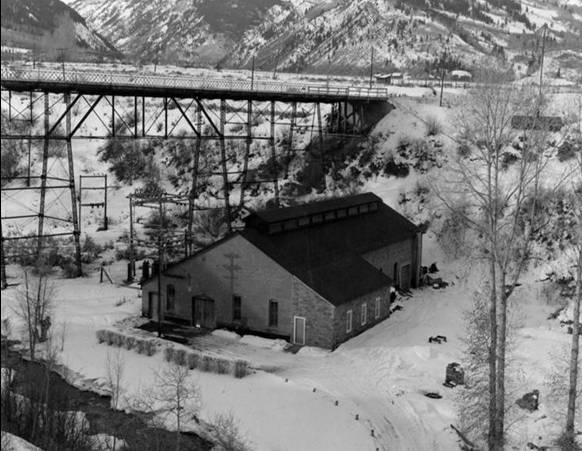
- 1885 - Aspen is the first city west of the Mississippi to light the town with hydroelectric power. It was built to service the mines in the area with municipal power being an afterthought.
- Early 1890s - Hunter Creek and Castle Creek have their own hydroelectric plants. Hunter Creek's supply pipe was the highest and longest in the nation at the time (860 feet).
- 1936 - Congress passes the Rural Electrification Act which allowed the federal government to make low-cost loans to farmers who banded together to create non-profit cooperatives for the purpose of bringing electricity to rural America. This act helped bring more expensive electricity to the valley.
- 1950 - Aspen achieves a grid connected system meaning there was an interconnected network from producers to consumers.
- 1956 - City of Aspen Municipal Energy was formed.
- 1984 - Ruedi power plant was built.
- 1986 - Current Maroon Creek hydroelectric plant was built.
- 2015 - Aspen reached the milestone of 100% renewable energy.
For more information about Aspen's hydropower history, please see Aspen Historical Society's video History: The Hydropower Pioneers of Aspen.
Renewable Energy Resources of Aspen
The City of Aspen works with several sources of energy suppliers.
Municipal Energy Agency of Nebraska (MEAN)
The Municipal Energy Agency of Nebraska (MEAN) is a nonprofit wholesale electricity supplier that provides reliable, cost-effective energy to the City of Aspen. In 2022, MEAN launced its Green Energy Program which incorporates 86 megawatts of renewable energy from wind, landfill gas and hydropower generation facilities. Aspen purchases this energy from MEAN using their green rate which balances theses renewable energy sources to deliver sustainable power while advancing towards MEAN's vision of achieving carbon neutrality by 2050. For more information, please visit MEAN's website.
Western Area Power Administration (WAPA)
The Western Area Power Administration (WAPA) specializes in delivering renewable hydropower, generated from federally managed dams across the western United States. This clean, sustainable energy source is derived from the natural flow of water, making it one of the most reliable and environmentally friendly forms of renewable energy. By purchasing hydropower from WAPA, the City of Aspen benefits from low-cost, carbon-free electricity, which reduces its overall environmental footprint and supports federal water and energy resource management efforts. WAPA's focus on hydropower distinguishes it from other energy providers and provides the City of Aspen with an important source of renewable energy for its overall energy portfolio. For more information, please visit WAPA's website.
Tri-County Water Conservancy District
In 2002, the City of Aspen and the Tri-County Water Conservancy District collaborated to revisit the feasibility of constructing a hydropower project at Ridgway Reservoir. With commitments and funding from both entities, an 8 megawatt hydroelectric generating facility was built and began operations in February 2014. The facility was constructed on an existing U.S. Bureau of Reclamation-owned dam along the Uncompahgre River. As of 2023, the City of Aspen purchases 100% of power created from this project which contributes to Aspen's renewable energy goals and our 100% renewable energy. Aspen provides portions of this renewable resource to the MEAN Green Energy Program. For more information, please visit Tri-County Water Conservancy District's website.
Local Renewable Energy Sources
Ruedi Power Plant
The Ruedi power plant was built on Ruedi Reservoir in 1984 and has a nameplate capacity of 5.0 megawatts. The hydroelectric plant supplies power to the local grid on the city's behalf. It was the first of Aspen's "New Renewables" projects. The water released through the dam also helps maintain fish habitats in the fifteen-mile reach of the Colorado River between the De Beque Canyon Roller Dam and the confluence of the Gunnison River. Ruedi hydroelectric is responsible for all Frying Pan River flows, supporting local sportsmen, businesses, and river habitat. The dam is operated by the United States Bureau of Reclamation, for more information and data regarding the Ruedi Dam visit the Bureau of Reclamation's Ruedi Dam webpage and Ruedi Water and Power Authority.
Maroon Creek Hydro
The current Maroon Creek hydroelectric plant was built in the 1980's and has a maximum output of 450 kilowatts. This facility has been critical in Aspen's journey to 100% renewable energy and is a great local, cost competitive, and stable energy source. In a given year, the facility provides about 3-5% of the city's overall power supply depending on weather conditions.
Solar
The City of Aspen supports the use of and utilizes photovoltaic systems throughout its electric system.
Rebate and Incentives for Customer and Commercial Energy Efficiency
The City of Aspen has partnered with its wholesale energy provider Municipal Energy Agency of Nebraska (MEAN) to provide incentives to its customers to upgrade to high efficiency heat pumps. For more information please see the flyer on Energy Efficiency Programs.
Community Office for Resource Efficiency (CORE) offers rebate programs to residents in the Roaring Fork Valley. For more information, visit CORE's Residential Rebates website and CORE's Commercial and Multi-Family Rebates website.
Learn More About Energy in General
The U.S. Department of Energy website on Energy Efficiency and Renewable Energy offers resources to learn about energy efficiency in the industry, power, and transportation sectors and renewable energy technologies.
Learn about the technology that fuels renewable energy with the National Renewable Energy Laboratory, and initiatives available to increase renewable energy usage.
For statistics on renewable energy and analysis of resources, supply, production, and consumption for all energy sources, see the Energy Information Administration from the Department of Energy.